

Most people don’t spend much time thinking about what’s in their shampoo, their dish soap, or the plastic container their lunch came in. That’s not a failure of awareness — it’s a reflection of how these products have been positioned. Clean packaging. Familiar brand names. Ingredients listed in small print that few people have the time or familiarity to decode.
But ingredient research is increasingly accessible, and the more people engage with it, the clearer a pattern emerges: many everyday products contain compounds that have raised questions among researchers, health advocates, and regulatory bodies — even if those concerns haven’t led to widespread policy changes.
This article isn’t a warning list. It’s a starting point. An introduction to some of the most commonly discussed ingredients so you know what to look for and where.
Why Everyday Products Contain Concerning Ingredients
In the United States, personal care and household products operate largely under a post-market regulatory system. In many cases, ingredients don’t require pre-market safety approval before products reach store shelves. The responsibility to prove harm often falls on regulators after the fact — a slow process that can take years, if it happens at all.
The Federal Food, Drug, and Cosmetic Act — the primary law governing cosmetic safety in the U.S. — was last meaningfully updated in 1938. Regulatory frameworks differ significantly worldwide. The European Union has taken a more precautionary stance, limiting over 1,300 substances in cosmetics, whereas U.S. regulations cover only a small fraction of that number.
Manufacturers also have legitimate reasons for using many of these ingredients — preservation, texture, shelf life, performance. The concern is less about single uses and more about repeated, long-term exposure and how these compounds interact over time.
A Starting List: Ingredients Worth Learning About
What follows is a light introduction to some of the most commonly discussed ingredients in the toxin awareness space. Each one will be covered in its own dedicated guide — this is simply a map of the landscape.
|
Parabens |
A family of preservatives widely used in personal care and cosmetic products to prevent bacterial growth. Commonly appear on labels as methylparaben, propylparaben, or butylparaben. They have been studied for their potential to mimic estrogen in the body, which has prompted ongoing research into their effects on hormonal health. |
|
Phthalates |
A group of chemicals used to make plastics more flexible and to help fragrance last longer in products. Often present in personal care items, food packaging, and household materials. Phthalates are among the most studied compounds in the endocrine disruption conversation, and some have been restricted in children’s products in several countries. |
|
Fragrance / Parfum |
A single word on an ingredient label that can legally represent a blend of hundreds of undisclosed chemicals. Fragrance formulas are protected as trade secrets, which means consumers often have no way of knowing exactly what they’re being exposed to. Found in everything from shampoo to cleaning products to candles. |
|
Formaldehyde-Releasing Preservatives |
Ingredients such as DMDM hydantoin, quaternium-15, and imidazolidinyl urea slowly release formaldehyde as they degrade. Formaldehyde is classified as a known human carcinogen. These preservatives are often used in hair and skincare formulations. |
|
PFAS |
Per- and polyfluoroalkyl substances — sometimes called “forever chemicals” — are a large class of synthetic compounds used for their water- and grease-resistant properties. Found in non-stick cookware, food packaging, water-resistant clothing, and some cosmetics. They are called forever chemicals because they do not readily break down in the environment or the body. |
|
Sodium Lauryl Sulfate (SLS) |
A surfactant responsible for the lathering effect in in many cleansing products like shampoos, body washes, and toothpastes. While generally considered safe at low concentrations, SLS can be a skin and mucosal irritant for some people, and its presence in products marketed for sensitive skin is a common point of concern. |
|
Synthetic Dyes |
Artificial colorants derived from petroleum, used to enhance product appearance. Appear on labels as FD&C or D&C followed by a color and number. Some synthetic dyes have been linked to allergic reactions and are restricted or banned in certain countries, while others remain widely approved. |
“You don’t need to memorize every ingredient. You need enough familiarity to know what warrants a closer look.”
Where to Start Looking
Not all products carry the same level of exposure risk. A helpful way to prioritize is to think about frequency of use, surface area of contact, and whether a product is rinse-off or leave-on.
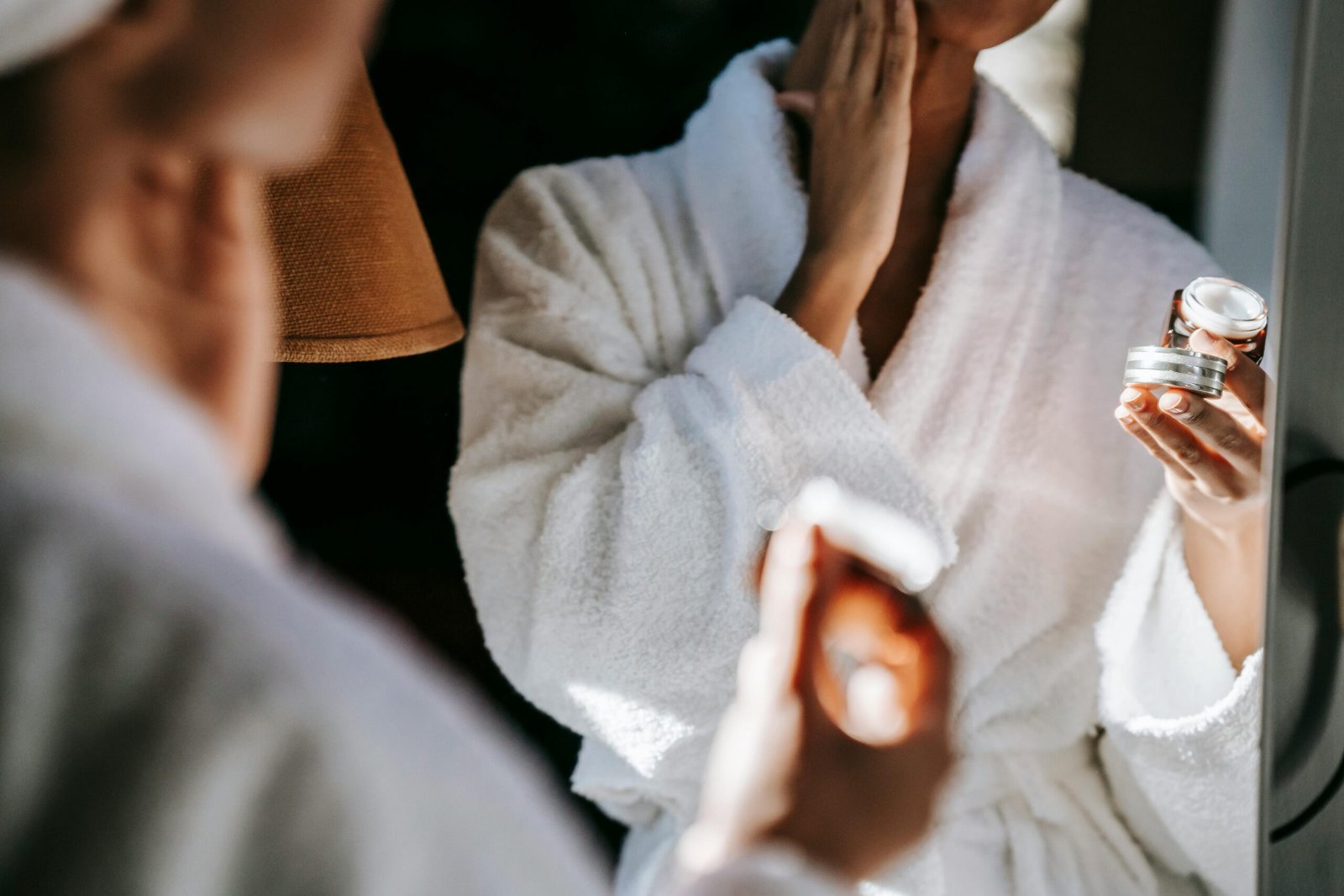
| 01 | Personal care products These tend to involve the highest daily skin contact — moisturizers, deodorants, shampoos, and body washes. Leave-on products like lotions and serums warrant more attention than rinse-off products like soap. |
| 02 | Cleaning products Often sprayed into the air or applied to surfaces that come into contact with hands and food. Fragranced sprays, air fresheners, and dryer sheets are common contributors to indoor chemical exposure. |
| 03 | Food packaging and cookware Materials that come into direct contact with food. PFAS compounds are found in non-stick coatings, plastic containers, and can linings — especially when heat or long storage times are involved. |
How to Check Your Products
A practical starting point is using a product scanning app. Tools like EWG’s Skin Deep database and Think Dirty allow you to search products or scan barcodes to view ingredient breakdowns and safety ratings. While these tools aren’t definitive and involve subjective scoring, they can serve as a useful first layer of research.
When reading labels, start by identifying familiar categories. Fragrance and parfum are easy to spot. Parabens typically include prefixes like methyl-, propyl-, or butyl-. Over time, ingredient names become more recognizable.
The goal isn’t to create a completely toxin-free environment overnight. It’s to build enough ingredient literacy to make more informed decisions — gradually, and at your own pace.

Leave a Reply