
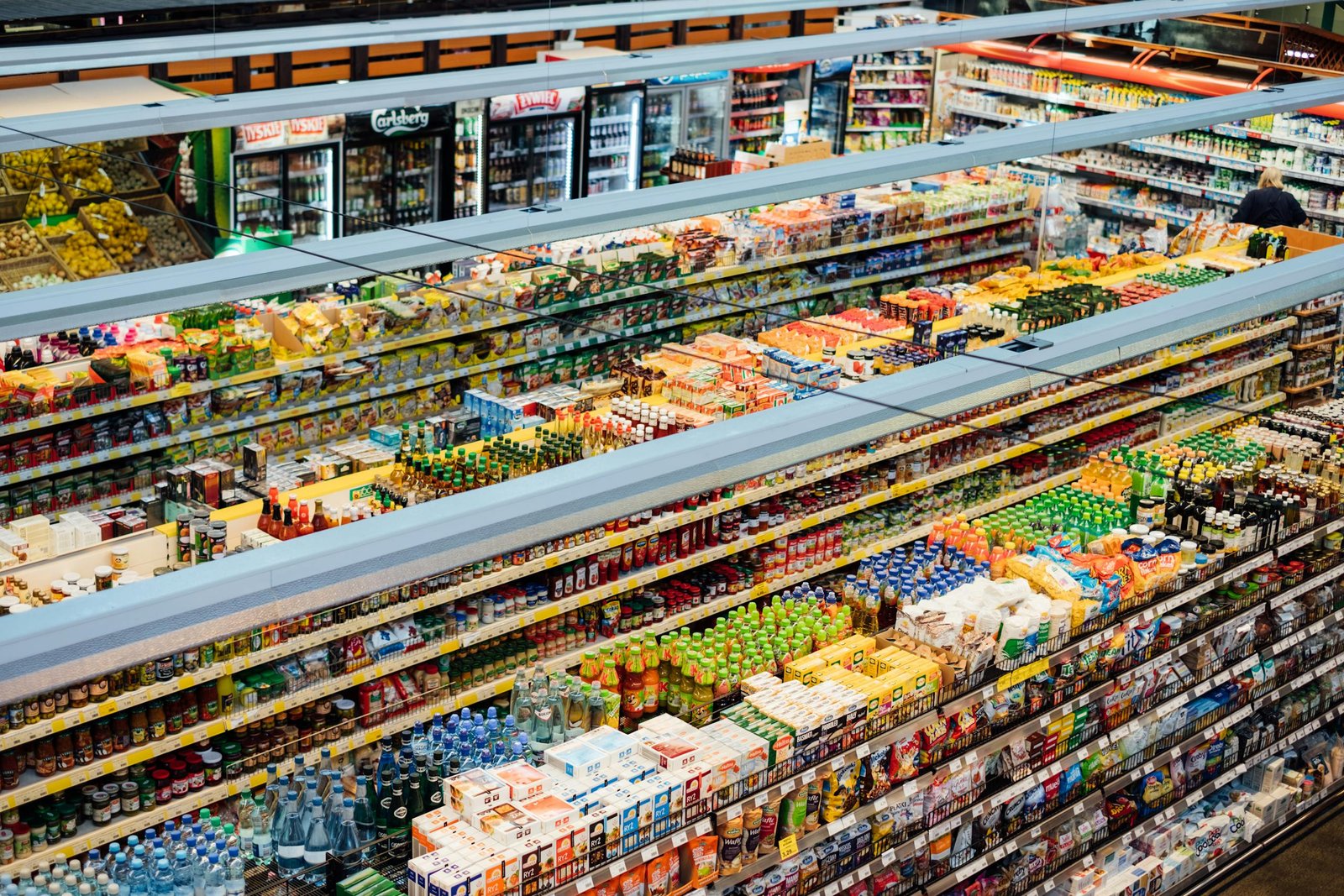
Most people walk into a grocery store and make decisions based on habit, price, and what looks good on the front of the package. Building a lower-toxin grocery list isn’t about replacing all of that with a rigid set of rules — it’s about adding a layer of awareness that gets easier the more you use it.
The goal isn’t to find a perfect list. It’s to build a framework for making more informed decisions about what goes into the cart — one that doesn’t require exhaustive research on every product, but produces meaningfully better choices than price and packaging alone.
Start With the Ingredient List
The ingredient list is the most direct source of information available at the point of purchase. Everything else — front-of-package claims, marketing language, brand positioning — is secondary to what the ingredient list actually says about what’s in the product.
As covered in how to read food labels, the ingredient list is organized in descending order by concentration. The first several entries tell you what the product is primarily made of. The latter entries — below the 1% threshold — are where preservatives, additives, flavor compounds, and colorants typically appear. Reading the list from top to bottom gives you a working picture of the product’s formulation before you evaluate anything else.
A few practical shortcuts for applying this at the grocery store. Products with short ingredient lists built from recognizable whole food sources require less evaluation than those with long lists of additives and flavor compounds. The length and complexity of the ingredient list is itself a useful signal — a product with twenty-plus entries across multiple additive categories is a different formulation than one with five. When time is limited, the first five entries and a quick scan for “fragrance,” “artificial flavor,” and unfamiliar preservatives covers the most relevant ground efficiently.
Use the NOVA Framework as a Filter
Before getting into ingredient-level evaluation, the NOVA classification — covered in depth in What Processed Really Means — and Why It Matters — provides a useful first-pass filter at the category level.
Group 1 and Group 2 foods — whole and minimally processed foods, and processed culinary ingredients — don’t require significant ingredient evaluation because they don’t have ingredient lists in the conventional sense. Fresh produce, plain grains, eggs, plain dairy, unprocessed meat, and whole legumes are what they appear to be. Oils, butter, flour, and salt are derived directly from natural sources with minimal processing. These form the most straightforward foundation of a lower-toxin grocery list.
Group 3 processed foods — canned goods, fermented products, cheese, bread — warrant a look at the ingredient list but are generally more straightforward to evaluate than Group 4. A can of tomatoes with one or two ingredients is a different product from a canned soup with twenty.
Group 4 ultra-processed foods are where ingredient-level evaluation becomes most relevant and most time-consuming. If the overall proportion of Group 4 foods in a grocery trip is low, the total evaluation burden drops significantly — which is one of the more practical arguments for orienting a grocery list around whole and minimally processed foods as a baseline.
Prioritize by Frequency and Volume
Not all groceries carry equal exposure weight, and treating them as if they do produces an evaluation burden that isn’t sustainable. The more useful framework is to prioritize by how much and how often.
A food eaten daily in significant quantities — breakfast staples, cooking oils, proteins, produce — has more cumulative exposure relevance than something eaten occasionally in small amounts. Spending evaluation effort on daily staples and applying a lighter touch to occasional purchases allocates attention where it produces the most impact.
This also applies to ingredient concerns specifically. A preservative or additive present in something consumed once a week contributes less to cumulative exposure than the same compound in something consumed daily. The foods that appear on every grocery list, every week, are the most worthwhile to evaluate carefully and the most worthwhile to upgrade when better options are available.
Where Certifications Help
Certifications are most useful in product categories where ingredient evaluation alone doesn’t capture the full picture — either because the production method matters as much as the ingredient list, or because contaminants not visible on a label are a relevant concern.
USDA Organic is most directly useful for produce, dairy, and meat — categories where agricultural inputs and production practices affect what’s in the food in ways the ingredient list doesn’t reflect. For packaged foods, it confirms that the agricultural ingredients meet organic standards but doesn’t evaluate the formulation as a whole.
Non-GMO Project Verified is worth reaching for in categories where GMO ingredients are common — corn, soy, canola, and products derived from them — particularly when USDA Organic isn’t available or is significantly more expensive.
Clean Label Project is particularly relevant for categories where contaminants are a documented concern — protein powders, infant formula, baby food, and supplements. It tests finished products for heavy metals, pesticides, and industrial contaminants that don’t appear on ingredient labels, which makes it a useful complement to ingredient list reading in these specific categories.
As covered in What Third-Party Certifications Actually Tell You, no single certification evaluates everything. Using the right certification for the right category is more effective than applying any one standard across the board.
The Dirty Dozen as a Practical Shortcut
Buying everything organic isn’t necessary and for most people isn’t practical. The EWG’s Dirty Dozen and Clean Fifteen lists — updated annually based on USDA pesticide testing data — provide a research-backed shortcut for prioritizing organic produce purchases.
The Dirty Dozen identifies the twelve produce items with the highest pesticide residue levels in conventional farming. Strawberries, spinach, kale, peaches, and apples have consistently appeared near the top of the list across recent years. Prioritizing organic for these specific items — while buying conventional for items that appear on the Clean Fifteen — captures the most meaningful pesticide reduction without requiring an all-organic produce budget.
A dedicated article on the Dirty Dozen and Clean Fifteen goes into more detail on how the lists are compiled and how to use them. For grocery list purposes, keeping the current Dirty Dozen list accessible — saved on a phone or printed — is the most practical implementation.
Building the List
With the foundational evaluation framework in place, applying it category by category produces a more consistent grocery list without requiring fresh analysis on every shopping trip.
Produce is the most straightforward category to navigate. Whole, fresh produce requires no ingredient evaluation. Prioritizing organic for Dirty Dozen items and buying conventional for Clean Fifteen items covers the most relevant pesticide reduction efficiently. Frozen plain vegetables are a practical alternative to fresh — they’re minimally processed and retain nutritional content without additives in most cases.
Proteins vary significantly by sourcing and production method. For animal proteins, label terms like grass-fed, pasture-raised, and free-range carry different meanings and varying degrees of verification. For plant-based proteins, the ingredient list is the primary evaluation tool — the degree of processing in plant-based protein products varies widely, from minimally processed whole legumes to heavily formulated Group 4 products.
Dairy benefits from the same sourcing lens as other animal products. Organic dairy confirms that animals weren’t given antibiotics or synthetic hormones and were fed organic feed. Grass-fed dairy reflects a production practice that affects the nutritional and fatty acid profile of the product. The ingredient list for flavored or processed dairy products — yogurts, flavored milks, cheese spreads — is worth checking for added sugars, thickeners, and flavor compounds.
Grains are most straightforward when purchased as whole, minimally processed options — plain oats, brown rice, whole grain flours — rather than as packaged grain products. When packaged grain products are on the list, the ingredient list is the primary evaluation tool. Whole grain as the first entry, a short overall list, and the absence of added sugars and artificial flavor compounds are the most relevant signals.
Packaged foods are the category where NOVA Group 4 is most prevalent and where ingredient evaluation matters most. Applying the ingredient list framework — first five entries for base formulation, latter entries for additives and flavor compounds, overall list length as a complexity signal — covers the most relevant ground efficiently. Where certifications are available and relevant, they add a layer of verification that the list alone doesn’t provide.
Beverages are a category where added sugars, artificial flavors, and sweeteners appear frequently under names that aren’t always immediately recognizable. Plain water, unsweetened teas, and plain sparkling water require no evaluation. Everything else benefits from an ingredient list check — particularly for non-nutritive sweeteners, natural and artificial flavors, and added sugar in its various forms.
A Framework, Not a Fixed List
A lower-toxin grocery list looks different for every household depending on budget, access, and priorities. The framework above doesn’t prescribe specific products or require across-the-board organic purchasing — it provides a consistent approach to evaluation that improves decision-making regardless of where the starting point is.
The habits compound over time. Recognizing familiar ingredients on a list gets faster. Knowing which certifications matter in which categories becomes intuitive. Identifying Group 4 products on sight requires less deliberate evaluation the more familiar the category becomes. The goal isn’t a perfect grocery trip — it’s a more informed one, repeated consistently enough that the framework becomes second nature.
The most accessible place to start is already in your kitchen. Before your next grocery trip, pick up a few products from the pantry or fridge and practice reading them — ingredient list first, front-of-package claims last. It takes a few minutes and costs nothing, and it’s one of the fastest ways to make the framework feel familiar before applying it on your next trip.
Ready to keep going? Browse our Mindful Eating articles to build a clearer picture of what’s in your food and how to evaluate it.



Leave a Reply