
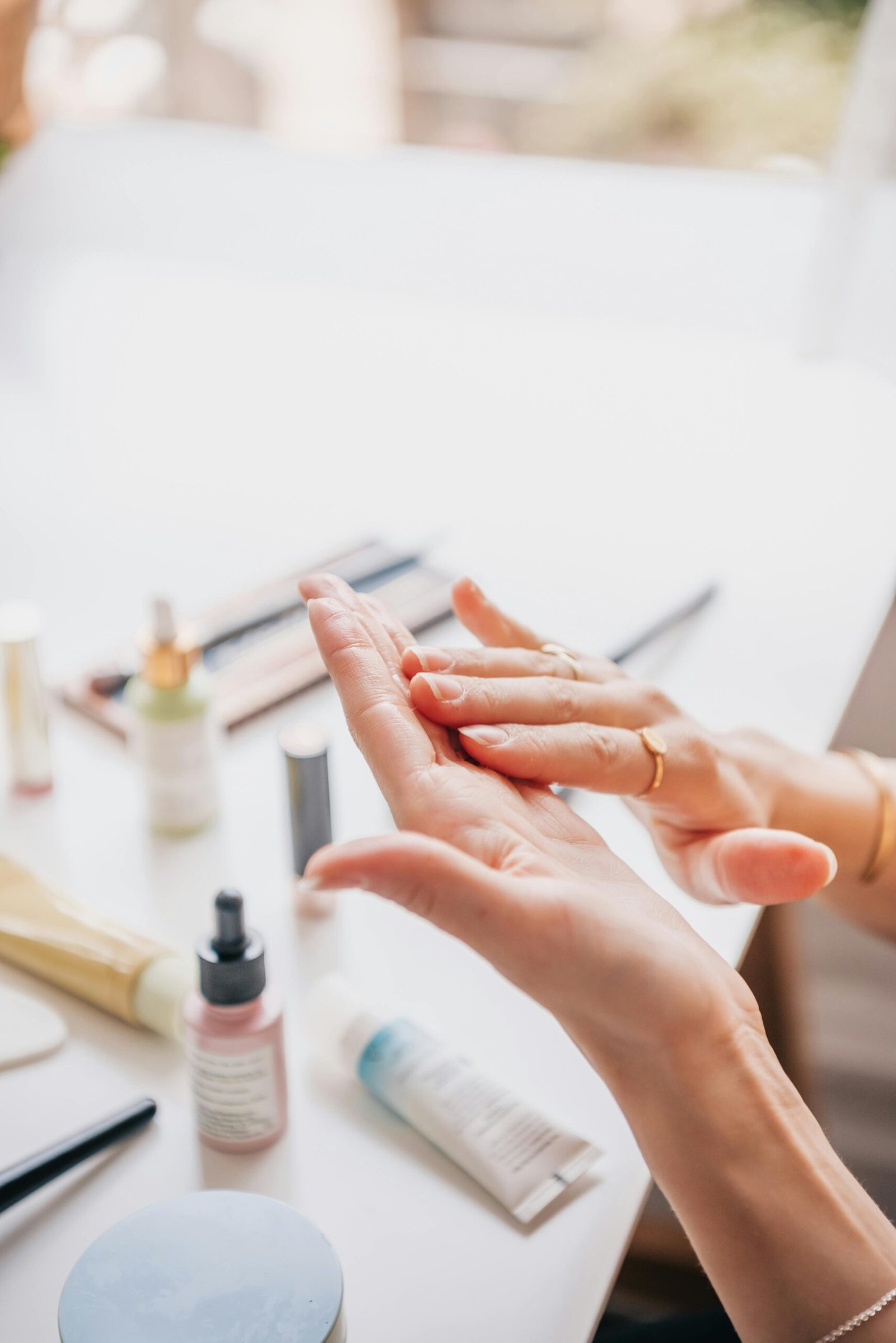
“Clean beauty” has become one of the most prominent categories in personal care marketing. It appears on product lines, retailer programs, brand positioning, and social media content across the industry — communicating something that most consumers interpret as safer, more transparent, and better for their health. The problem is that what “clean” actually means varies significantly depending on who’s using it, and in most cases, it means exactly what the brand or retailer decides it means.
Understanding what the term actually represents — and where it falls short — changes how useful it is as a purchasing signal.
What “Clean Beauty” Actually Is
“Clean beauty” has no federal definition. The FDA does not recognize it as a regulated term, there are no standardized criteria for its use, and no external verification is required before a brand applies it to a product or an entire product line. Any brand can call any product “clean” without meeting a defined standard, submitting to third-party review, or demonstrating that the claim is substantiated beyond the brand’s own internal definition.
The term emerged as a consumer-driven marketing category in the early 2010s, accelerated by growing awareness of ingredient safety gaps in the personal care industry — the same regulatory gaps covered in Why Personal Care Products Are Less Regulated Than You Think. As consumers began asking more questions about what was in their products, brands and retailers responded by creating a category that signaled responsiveness to those concerns. The category was built around consumer demand rather than regulatory change, which is why it exists as a marketing designation rather than a defined standard.
As Rubin and Brod noted in a 2019 commentary in JAMA Dermatology, the clean beauty movement’s foundational assumption — that natural ingredients are inherently safer than synthetic ones — isn’t supported by the evidence. Natural origin doesn’t determine safety profile, and the clean beauty category has developed in ways that reflect marketing logic more than toxicological reasoning.”Clean beauty” has no federal definition. The FDA does not recognize it as a regulated term, there are no standardized criteria for its use, and no external verification is required before a brand applies it to a product or an entire product line. Any brand can call any product “clean” without meeting a defined standard, submitting to third-party review, or demonstrating that the claim is substantiated beyond the brand’s own internal definition.
How Different Retailers and Brands Define It
The variation in what “clean” means across the brands and retailers that use it is significant enough to make the term unreliable as a cross-brand signal.
Sephora’s Clean at Sephora program — one of the more structured retail definitions — maintains a list of ingredients that products must exclude to carry the designation. The list has evolved over time and covers a defined set of substances including certain parabens, sulfates, and phthalates. It does not cover fragrance compound disclosure, doesn’t require third-party verification, and is developed and administered by the retailer rather than an independent body.
Credo Beauty applies a more extensive restricted ingredient list — the Credo Dirty List — that covers a broader range of substances than most retail programs. It also has requirements around fragrance transparency that go further than most clean beauty definitions. It is still a retailer-developed standard rather than an independently verified one.
Individual brand definitions vary more widely still. A brand that defines “clean” as free from parabens and sulfates is using the term differently from one that defines it as free from all synthetic ingredients, which is using it differently from one that defines it as EWG Verified. All three can use “clean” on their packaging without any of them being wrong in a regulatory sense — because there’s no regulatory sense in which the term is defined.
The practical implication is that “clean” on a label tells you a brand has made some decisions about ingredients — but without knowing which decisions, the term alone doesn’t tell you what those decisions were.
What “Clean Beauty” Typically Excludes — and What It Doesn’t
Most clean beauty definitions share a common core of excluded ingredients — parabens, phthalates, sulfates, and certain synthetic colorants appear on most restricted lists. Beyond that core, the gaps are significant.
Fragrance is the most consistent gap. Most clean beauty definitions do not require fragrance compound disclosure, meaning a product can carry a clean beauty designation and still contain a fragrance blend whose full composition isn’t disclosed. A blend can contain sensitizers, endocrine-disrupting compounds, and neurotoxic substances without any of them appearing on the label. The clean designation doesn’t change what “fragrance” does and doesn’t disclose.
Allergens and sensitizers present a documented problem that the clean beauty framing doesn’t resolve. A 2022 study by Tran, Comstock, and Reeder found that products marketed as clean frequently contained allergenic ingredients — including botanical extracts, essential oils, and naturally derived compounds — at rates comparable to or exceeding conventional products. The study’s findings directly challenge the assumption that clean or natural formulations are less likely to cause sensitization reactions. Travassos et al. similarly documented non-fragrance allergens as a significant contact sensitization source in cosmetics — compounds that appear in clean formulations without triggering restriction under most clean beauty definitions. Minamoto’s research on skin sensitizers in cosmetics and skin care further established that sensitization risk isn’t confined to synthetic ingredients — naturally derived compounds are well-represented among documented skin sensitizers.
Endocrine-disrupting compounds can still be present in clean-labeled products. Gore and Cohn’s 2020 commentary in JAMA Dermatology noted that endocrine-disrupting chemicals remain present in cosmetic products despite growing consumer awareness — in part because clean beauty definitions don’t systematically screen for hormonal activity, and in part because some endocrine-disrupting compounds don’t appear on standard restricted ingredient lists. A product can be marketed as clean and still contain compounds with demonstrated hormonal activity.
Preservative removal introduces its own risk that clean beauty marketing rarely addresses. The push toward preservative-free formulations — driven by consumer skepticism toward certain preservatives — has produced products with inadequate microbial protection. Research by Bashir and Lambert found that used cosmetic products can carry significant microbial contamination, with implications for consumer health. Uter et al.’s research on coupled exposure to cosmetic preservatives adds further context: preservatives exist in formulations for a reason, and their removal without adequate replacement creates a different category of risk that clean beauty positioning doesn’t typically acknowledge. A product without parabens or phenoxyethanol isn’t automatically safer — it depends on what, if anything, has replaced them.
Contaminants aren’t addressed by clean beauty definitions because they aren’t intentional ingredients. As noted in How to Read a Personal Care Ingredient List, contaminants like 1,4-dioxane can be present in products with entirely clean ingredient lists as a byproduct of manufacturing. No clean beauty definition screens for contaminants unless third-party testing is explicitly part of the standard.
How It Differs from Third-Party Certification
The structural difference between “clean beauty” as a self-applied marketing term and a third-party certification is the same difference that exists between any unregulated label claim and a verified one.
A brand that calls its products clean is making a self-assessed claim based on its own criteria, without external review of whether those criteria are met or whether the criteria themselves are meaningful. A product carrying EWG Verified or MADE SAFE certification has been evaluated against defined standards by an independent organization with no financial stake in the outcome.
As covered in What Third-Party Certifications Actually Tell You, certifications have their own limits and gaps. But they represent a fundamentally different category of claim — one where the standard is defined externally, the evaluation is conducted independently, and the result is verifiable. Clean beauty is none of those things unless a brand has chosen to pursue certification alongside the marketing designation.
The presence of a clean beauty claim on a product isn’t a reason to dismiss it — some brands that use the term have genuinely invested in formulation transparency and responsible ingredient sourcing. It’s a reason to look further rather than stopping at the label.
How to Use It Practically
The most useful way to treat “clean beauty” is as a starting signal rather than a final answer — an indication that a brand has thought about ingredient choices beyond the regulatory baseline, without assuming that thought has been translated into a specific or comprehensive standard.
From that starting point, a few more reliable reference points fill in what the term leaves open. The ingredient list tells you what’s actually in the product — the specific ingredients, their order by concentration, and the presence of preservatives, fragrance, and additives worth noting.
Third-party certifications — EWG Verified, MADE SAFE — add independent verification for brands that have pursued them. Their presence alongside a clean beauty claim is a more substantive signal than the marketing designation alone.
The EWG Skin Deep database allows you to look up specific ingredients and products and review available safety data — a practical complement to label reading that doesn’t require memorizing ingredient profiles before every purchase.
Using these tools in combination gives you a more complete picture than “clean” alone — and makes the term useful as a first filter rather than a final answer.
Real Demand, Imprecise Signal
The clean beauty movement reflects genuine and legitimate consumer demand for personal care products that are more transparent, better formulated, and held to a higher standard than the regulatory baseline requires. That demand has produced real changes in how some brands approach formulation and ingredient disclosure.
The term itself, however, is not the most reliable way to meet that demand. Without a defined standard, external verification, or consistent criteria across brands and retailers, “clean” communicates a positioning rather than a substantiated claim. The research on allergens, endocrine-disrupting compounds, microbial risk, and sensitizers in clean-labeled products shows that the gap between the term and what it implies is significant enough to warrant looking further.
Knowing what “clean beauty” actually represents doesn’t require avoiding products that use it. It requires treating it as the starting point it is — and using more reliable tools to evaluate what’s actually in the product.
The references used in this article are a starting point — we encourage you to read further and draw your own conclusions.
The framework is one piece of the picture. Browse our Personal Care articles to build on what you know — and make more informed choices about what goes on your body.

Leave a Reply