
Most people know formaldehyde as something to be aware of in the home. It can off-gas from certain building materials, linger in new furniture, and has long been associated with preservation and laboratory settings. What’s less commonly understood is that formaldehyde exposure doesn’t always come from a product that lists formaldehyde as an ingredient.
Some personal care products, cleaning products, and textiles contain compounds that gradually release formaldehyde as part of how they work. In other words, a product can expose you to formaldehyde without formaldehyde ever appearing on the ingredient list.
That distinction matters because knowing what to look for is the first step toward making sense of your exposure.
What Is Formaldehyde?
Formaldehyde is a colorless gas with a sharp, recognizable smell — the kind often associated with biology labs and preservation fluid. It’s also one of the simplest organic compounds, made up of carbon, hydrogen, and oxygen, and it occurs naturally in both the environment and the human body as a byproduct of normal metabolism.
At low background levels, formaldehyde is simply part of our biochemical environment. The concern comes with elevated or sustained exposure, particularly through inhalation, skin contact, or ingestion.
The International Agency for Research on Cancer (IARC) classifies formaldehyde as a known human carcinogen, its strongest classification for substances where there is sufficient evidence of cancer-causing potential in humans. The cancers most consistently associated with formaldehyde exposure are nasopharyngeal cancer and leukemia, with the clearest evidence coming from occupational settings where exposure can be substantially higher than what most people encounter at home.
That distinction is important. The strongest evidence of formaldehyde-related cancer comes from higher-exposure environments, while the research surrounding the lower, chronic exposures more typical of homes and consumer products is less definitive. The carcinogen classification, however, applies to formaldehyde as a substance regardless of where the exposure comes from.
Formaldehyde is used in so many applications because it’s chemically useful. It can act as a preservative, antimicrobial, and cross-linking agent — properties that make it effective in everything from cosmetics to textiles to building materials. Those same properties are also what make exposure worth understanding.
What Are Formaldehyde-Releasing Compounds?
Formaldehyde-releasing compounds are ingredients that gradually release small amounts of formaldehyde over time. They’re primarily used as preservatives, helping prevent bacteria, mold, and yeast from growing in products that contain water.
The slow release is intentional. Rather than adding a large amount of preservative all at once, these compounds provide a controlled supply of formaldehyde throughout the product’s shelf life.
This creates an important labeling distinction.
A product containing DMDM hydantoin, for example, will list DMDM hydantoin as the ingredient. The formaldehyde released by that ingredient doesn’t appear separately on the label because it isn’t being added as a standalone ingredient — it’s released as part of the preservative’s function.
So if you’re scanning a label specifically for the word “formaldehyde,” you could easily miss it.
The practical takeaway is simple: you need to know the names of the formaldehyde-releasing compounds themselves.
The Most Common Ones to Know
There are several formaldehyde-releasing compounds that appear regularly in personal care products, cleaning products, and other consumer goods. Learning their names makes them much easier to identify when you’re reading an ingredient list.
DMDM Hydantoin
DMDM hydantoin is one of the more widely used formaldehyde-releasing preservatives in personal care products. It can be found in shampoos, conditioners, body washes, and some leave-on products, where it helps prevent microbial growth throughout the product’s shelf life.
It’s also one of the more extensively studied formaldehyde releasers and has been associated with contact dermatitis and skin sensitization in research on cosmetic ingredients.
Imidazolidinyl Urea
Imidazolidinyl urea is another common preservative used in moisturizers, shampoos, and other rinse-off and leave-on products.
One thing that makes it particularly relevant is that its formaldehyde release can increase with temperature. That means conditions such as a warm bathroom can influence how much formaldehyde is released from a product over time.
Diazolidinyl Urea
Diazolidinyl urea is closely related to imidazolidinyl urea and is often used alongside other preservatives, including parabens, to provide broader protection against microbial growth.
Like other formaldehyde releasers, it gradually releases formaldehyde as part of its preservative function and can contribute to contact sensitization. When multiple formaldehyde-releasing preservatives appear together on a label, it’s worth recognizing that they’re part of the same preservation strategy.
Quaternium-15
Quaternium-15 is another formaldehyde-releasing preservative, but it stands out because it can release relatively large amounts of formaldehyde compared with many other preservatives in this category.
It has also been identified as a common cause of contact allergy, particularly in patch-testing research. It’s less commonly used today than some other formaldehyde releasers, but it can still appear in products such as shampoos, cleansers, and cosmetics.
Bronopol
Bronopol, also known as 2-bromo-2-nitropropane-1,3-diol, is a preservative that releases formaldehyde and has another property worth knowing about: it can act as a nitrosating agent.
That means it can potentially react with certain other compounds in a formulation to form nitrosamines, a separate class of compounds that includes substances with carcinogenic concerns.
Bronopol therefore isn’t identical to the other formaldehyde releasers in terms of its potential concerns. It’s an ingredient worth recognizing on a label for more than one reason.
Where Do They Show Up?
Formaldehyde-releasing compounds can appear in more places than most people realize. Personal care products are one of the most relevant consumer exposure pathways, but they aren’t the only one.
Personal Care Products
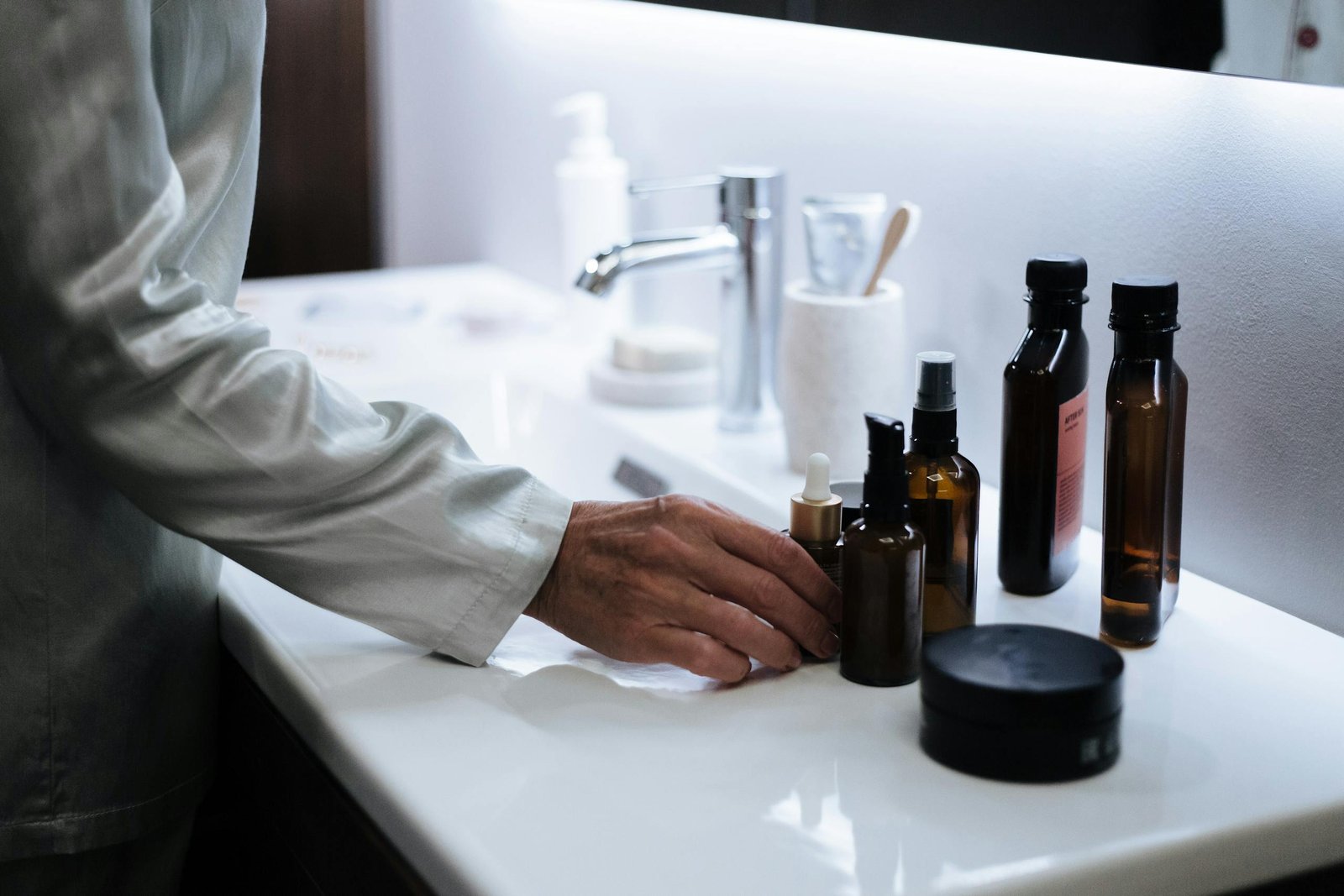
Personal care products are particularly important because they’re often used directly on the body, sometimes every day. Leave-on products can also remain in contact with the skin for hours.
Formaldehyde-releasing preservatives can be found in products such as:
- Shampoos
- Conditioners
- Body washes
- Liquid soaps
- Moisturizers
- Some makeup products
Like many preservatives, they’re generally found toward the end of an ingredient list because they’re used at relatively low concentrations. Their position on the label, however, doesn’t mean they’re irrelevant. For someone who uses a product every day or has already become sensitized to one of these ingredients, even relatively small amounts can matter.
Cleaning Products
Some liquid cleaning products also use formaldehyde-releasing compounds to prevent microbial growth.
Potential exposure can come through skin contact and inhalation, particularly when products are used in enclosed or poorly ventilated spaces.
There’s also a labeling issue here. Unlike cosmetics, cleaning products in the United States generally aren’t required to provide the same kind of comprehensive ingredient disclosure on the package. That means identifying every preservative in a cleaning product can be considerably more difficult than reading a personal care ingredient list.
Textiles and Clothing
Clothing is a less obvious source of formaldehyde exposure.
Certain permanent-press, wrinkle-resistant, and easy-care finishes rely on formaldehyde-based resins to help textile fibers maintain their shape and resist wrinkling. Some residual formaldehyde can remain in the finished fabric and may be released through skin contact or into the surrounding air.
Heat and humidity can increase release, which is one reason clothing can be a more relevant exposure source under certain conditions.
For people who are sensitive to formaldehyde, textile treatments have also been associated with contact dermatitis. Washing new clothing before wearing it can reduce residual chemicals, although it doesn’t necessarily remove them completely.
If you’re particularly concerned about textile exposure, certifications such as OEKO-TEX Standard 100 can provide additional information about chemical limits in finished textiles.
Building Materials
Building materials are probably the source most people already associate with formaldehyde.
Composite wood products such as particleboard, medium-density fiberboard (MDF), and plywood can contain formaldehyde-based adhesive resins that release formaldehyde into indoor air over time.
This is one reason formaldehyde is considered an important indoor air quality concern, particularly in newer furniture, cabinetry, flooring, and other products made with composite wood.
The mechanism is different from what happens with formaldehyde-releasing preservatives in personal care products, but the underlying concern is the same: formaldehyde can enter the environment without being obvious from the finished product itself.
What Does the Research Show?
When it comes to formaldehyde-releasing compounds in consumer products, the research points to several different concerns. The strongest and most consistently documented at typical consumer exposure levels involve skin sensitization and contact dermatitis, while respiratory effects and cancer concerns require more context.
Contact Dermatitis and Sensitization
For everyday consumer exposure, skin sensitization is one of the clearest concerns associated with formaldehyde and formaldehyde-releasing preservatives.
Repeated exposure can cause the immune system to become sensitized, leading to allergic contact dermatitis — a delayed reaction that can cause symptoms such as redness, itching, irritation, and rash.
Once someone becomes sensitized, continued exposure can trigger reactions at relatively low levels. Sensitization can also extend beyond the original product. Someone who develops an allergy to a formaldehyde-releasing preservative may later react to other sources of formaldehyde, including certain textiles or building materials.
Quaternium-15, in particular, has been identified as a relatively common contact allergen in patch-testing studies.
Respiratory Effects
Formaldehyde is also a respiratory irritant. Higher exposures can irritate the nose, throat, and airways, and respiratory effects are particularly well documented in occupational settings.
At the lower concentrations associated with many consumer products and indoor environments, the evidence is less consistent. Still, people who are particularly sensitive to formaldehyde may experience respiratory irritation at levels that others tolerate without noticeable symptoms.
This is one reason ventilation matters, especially when using products that may release formaldehyde in enclosed spaces.
What About Cancer?
This is where it’s important to distinguish between formaldehyde itself and the compounds that release it.
Formaldehyde is classified by IARC as a known human carcinogen, based largely on evidence from higher-exposure occupational settings. Formaldehyde-releasing compounds are not automatically equivalent to formaldehyde in terms of their individual toxicity or cancer risk, but they are relevant to the discussion because their intended function is to release formaldehyde.
The amount released from a consumer product can be substantially lower than the exposures associated with the clearest evidence of occupational cancer risk. That doesn’t make the two exposure scenarios equivalent, and it’s important not to imply that everyday use of a personal care product carries the same cancer risk as high occupational exposure.
The more useful takeaway is that formaldehyde is a substance with established carcinogenic potential, and formaldehyde-releasing ingredients represent one pathway through which exposure can occur.
How to Identify and Reduce Exposure
The good news is that identifying formaldehyde-releasing preservatives is relatively straightforward once you know what names to look for.
When checking personal care products, keep an eye out for:
- DMDM hydantoin
- Imidazolidinyl urea
- Diazolidinyl urea
- Quaternium-15
- Bronopol
These ingredients are generally found toward the end of an ingredient list because they’re used at relatively low concentrations, but their position doesn’t tell you whether they’re worth avoiding for your particular situation.
If you want to reduce exposure, one practical place to start is with products you use frequently and leave on your skin. Choosing products preserved with alternatives such as phenoxyethanol, sodium benzoate, potassium sorbate, or other preservation systems can help you avoid formaldehyde-releasing preservatives without eliminating preservatives altogether.
That last part matters. Preservatives serve an important purpose in water-based products. Removing them entirely isn’t automatically safer because poorly preserved products can allow bacteria, mold, and yeast to grow.
For those looking for third-party verification, EWG Verified products restrict formaldehyde-releasing preservatives as part of their ingredient standards.
For textiles, washing new clothing before wearing it can reduce residual chemicals from manufacturing and finishing treatments. If you want to take that a step further, look for certifications such as OEKO-TEX Standard 100, which sets limits for formaldehyde and other substances in finished textiles.
When purchasing furniture or other composite wood products, certifications such as CARB Phase 2 (CARB2) and GREENGUARD Gold can help identify products designed to meet lower formaldehyde-emission standards.
A Label Gap Worth Knowing
Formaldehyde-releasing compounds are a good example of why ingredient literacy goes beyond simply looking for a single ingredient name.
If you search a label for “formaldehyde” and don’t find it, that doesn’t necessarily mean the product has no connection to formaldehyde exposure. The product may instead contain an ingredient designed to release it gradually.
That’s why names like DMDM hydantoin, imidazolidinyl urea, diazolidinyl urea, quaternium-15, and bronopol are worth recognizing.
Once you know what they are, a label that might have looked meaningless becomes much easier to interpret.
And that’s ultimately the goal — not to make you afraid of every product in your home, but to give you enough information to understand where exposure can come from, which products deserve more attention, and what options you have if you want to reduce it.
The references used in this article are a starting point. We encourage you to read further, consider the evidence for yourself, and make choices that feel appropriate for your household.
New to ingredient awareness? Browse our starter guides for practical next steps across every category.


Leave a Reply