
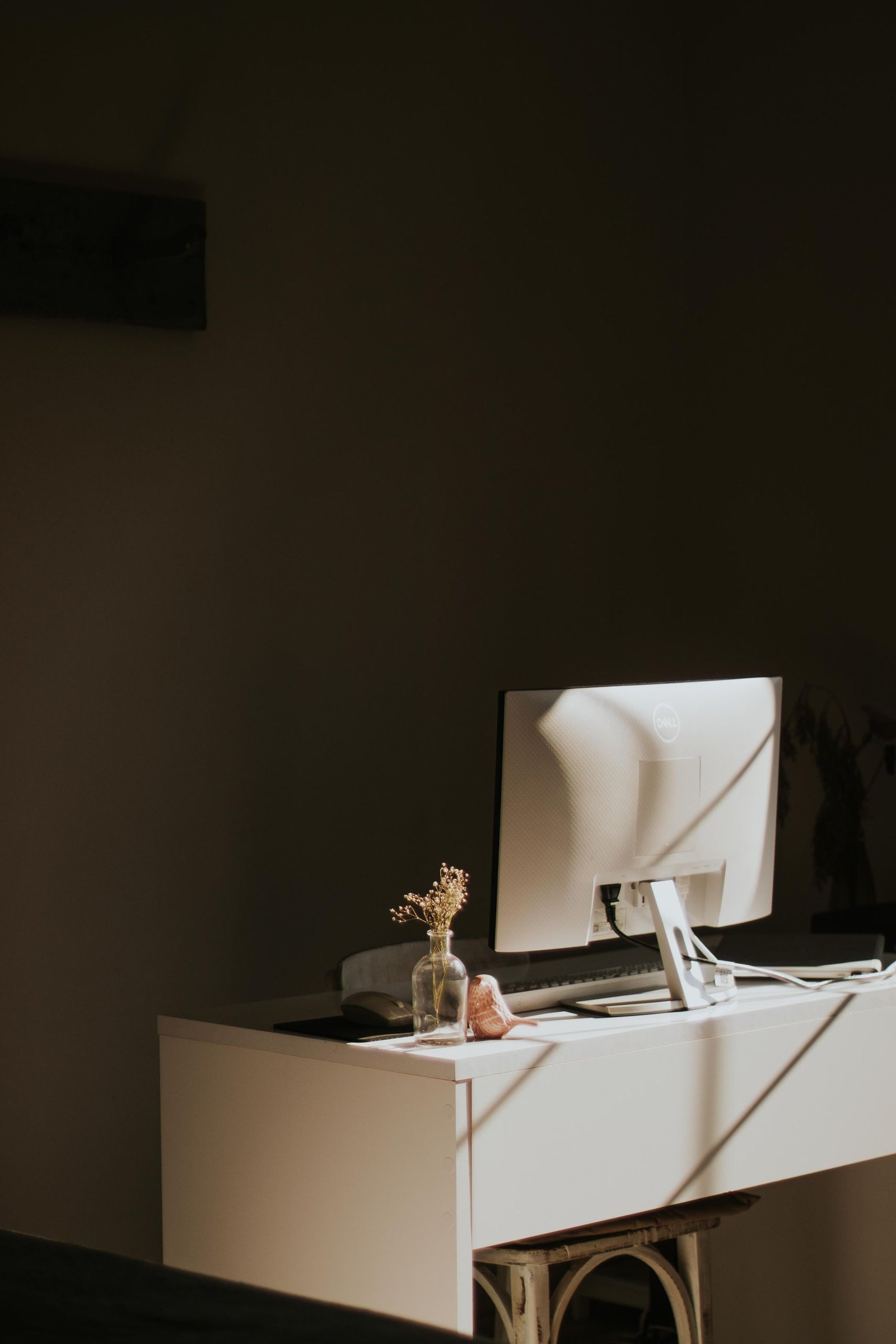
The home office has become one of the most consistently occupied rooms in the home for a growing number of people — and one of the least examined from an exposure standpoint. Eight or more hours a day in a small, often poorly ventilated room surrounded by multiple electronic devices, composite wood furniture, and a printer running in the corner creates an exposure environment that deserves more attention than it typically gets.
This is the sixth installment in the Hidden Toxin Exposure Series — a room-by-room guide to the overlooked exposure sources in the home. The home office brings together several exposure categories that have been introduced across earlier installments — EMF, VOCs, and furniture materials among them — in a space where the duration of daily occupancy amplifies their significance.
EMF from Devices
The home office is likely the room in the home with the highest concentration of simultaneously operating EMF-emitting devices. A typical setup includes a computer or laptop, one or two monitors, a WiFi router or access point, a phone, a smart speaker, other wireless accessories — keyboard, mouse, headset — and possibly a printer and additional equipment. Each of these devices emits radiofrequency electromagnetic fields during operation, and in a small workspace they operate within close, sustained proximity to the person sitting at the desk for the majority of the working day.
As introduced in Hidden Toxin Exposures in the Home: What Most People Overlook, the research on EMF exposure and health effects is an active area rather than a settled one. What is clear is that sustained, close-range exposure to multiple simultaneous EMF sources represents a different and higher exposure profile than the occasional device use that most general EMF guidance addresses. The home office, for people who work from home full time, is where that sustained exposure is most concentrated.
Several practical adjustments reduce the EMF load of a home office without requiring the elimination of the technology that makes it functional. Switching from WiFi to a wired ethernet connection for the computer eliminates the device’s wireless transmission entirely — a single switch that removes one of the more significant EMF sources from the workspace. Placing the router in a different room rather than the home office reduces the proximity to the most powerful wireless transmitter in the home. Using a wired keyboard and mouse rather than wireless peripherals reduces the number of continuously transmitting devices in the immediate workspace. A WiFi timer that powers down the router’s wireless signal during non-working hours — covered in the Hidden Exposures overview — reduces exposure during the hours the office isn’t in use.
Screen Time and Blue Light
The home office is the primary blue light exposure environment for most people who work in front of screens — and the exposure profile during work hours is distinct from the evening exposure that most blue light conversation focuses on.
Evening blue light exposure is significant because it suppresses melatonin production in the hours before sleep, disrupting circadian rhythm and sleep quality. As covered in Hidden Toxin Exposures in the Living Room, switching to warm-toned lighting in the evening is one of the most practical available adjustments for that concern. Work-hours screen exposure is different in character — it occurs during daylight hours when some blue light exposure is part of normal biological function — but sustained close-range screen use for eight or more hours produces eye strain, visual fatigue, and cumulative exposure that warrants its own mitigation separate from the evening lighting concern.
Blue light filtering screen covers, glasses with blue light filtering lenses, and built-in display settings that reduce blue light emission during working hours all address the work-hours exposure concern without affecting the evening lighting adjustments that address the circadian rhythm concern separately. They’re complementary rather than interchangeable — work hours and evening hours represent different aspects of the same blue light exposure question.
The 20-20-20 rule — looking at something 20 feet away for 20 seconds every 20 minutes — is the most widely recommended adjustment for visual fatigue from sustained screen use, and it costs nothing to implement. It doesn’t reduce blue light exposure directly but addresses the eye strain component of sustained screen time that’s distinct from the blue light concern.
Indoor Air Quality
Home office indoor air quality is affected by several sources simultaneously — and the small size and limited ventilation of most home office spaces means those sources concentrate more readily than they would in a larger, better-ventilated room.
Desk furniture and office equipment off-gas VOCs from composite wood construction, synthetic materials, and surface finishes — the same concerns covered in Volatile Organic Compounds at Home: A Plain-Language Guide and How to Evaluate Furniture Materials Before You Buy apply directly to office desks, bookshelves, and storage furniture. A home office filled with flat-pack composite wood furniture is a more active off-gassing environment than one furnished with solid wood or metal alternatives — particularly when the office is in a room with limited ventilation and the furniture is relatively new.
Monitors and electronic equipment off-gas flame retardant compounds and other chemicals from their plastic housings — most particularly when new and when operating at higher temperatures. The flame retardants used in electronics housing — including certain brominated compounds — are the same class that has been associated with endocrine disruption in furniture foam. In a small office where electronics run continuously throughout the working day, this represents a sustained low-level off-gassing source that doesn’t exist at the same scale in rooms where electronics are used only occasionally.
Printers are a specific and underappreciated indoor air quality concern in the home office. During printing, laser printers release toner particles — ultrafine particles small enough to be inhaled deeply into the lungs — along with VOCs from the heating process that fuses toner to paper. Research has documented that laser printers can produce indoor particle concentrations during operation that are comparable to levels found in moderately polluted outdoor air. Inkjet printers produce fewer particles than laser printers but still release some VOCs during printing. Positioning the printer in a well-ventilated area, opening a window during printing, or running an air purifier near the printer during operation reduces the particle and VOC inhalation concern from this source.
Desk Materials and Surfaces
The desk itself is also worth evaluating and most conventional office desks, particularly those in the flat-pack price range, are built from composite wood that carries formaldehyde off-gassing concerns.
Particleboard and MDF — the most common materials used in flat-pack desks — use urea-formaldehyde adhesive resins that off-gas formaldehyde over time. As covered in How to Evaluate Furniture Materials Before You Buy, CARB2 compliance is the most relevant certification for filtering through composite wood products — it sets strict limits on formaldehyde emissions and is worth specifically verifying rather than assuming before buying. Solid wood desks eliminate the composite wood concern entirely; metal-frame desks with solid wood or glass surfaces are another alternative that avoids composite wood construction.
Office chairs introduce upholstery and foam concerns similar to those covered in the furniture materials article — flame retardant treatments on foam, synthetic fabric off-gassing, and what sustained daily contact with chair upholstery means given the hours spent sitting. Looking for chairs with GREENGUARD Gold certification, natural fiber upholstery, or flame retardant-free foam construction addresses the chair toxin exposure specifically.
Desk surfaces treated with laminates or synthetic coatings add another off-gassing layer — a solid wood surface with a water-based finish, or a glass surface, is more transparent from a material standpoint than a melamine or high-pressure laminate-coated particleboard desk.
Headphones and Earbuds
Most EMF guidance addresses occasional device use — but wearing wireless headphones or earbuds for six or more hours during a workday is a different situation entirely.
Wireless headphones and earbuds communicate with connected devices using Bluetooth — a form of radiofrequency electromagnetic field emission at close range to the head and ear. For occasional use, this represents a minimal and intermittent exposure. For someone on calls and listening to audio through wireless earbuds for six or more hours of a working day, the exposure is sustained and at very close proximity — the devices are worn directly on or in the ear, closer to brain tissue than almost any other consumer device is typically used.
The research on Bluetooth device EMF specifically is less developed than the research on phone radiofrequency radiation — Bluetooth operates at lower power levels than cellular transmission, which is frequently cited as a reason for lower concern. Lower power doesn’t mean zero exposure, and sustained daily use in a work context represents a cumulative exposure that occasional use doesn’t.
Wired headphones and earbuds eliminate the Bluetooth transmission concern entirely — they deliver audio through a physical cable rather than a wireless signal. For people who use headphones primarily in a stationary home office context rather than for mobility, wired alternatives are a practical and straightforward swap. Over-ear wired headphones also sit at a distance from the ear canal rather than sitting directly inside it — a meaningful difference in how close the device is to sensitive tissue during extended use.
Ventilation and Air Quality
Many home offices occupy rooms that weren’t designed for sustained daily occupancy — converted spare bedrooms, basement spaces, or dedicated rooms that may have limited natural ventilation and no dedicated air exchange infrastructure. This makes the home office one of the potentially poorest-ventilated spaces in the home despite being one of the most consistently occupied.
Limited ventilation means that VOCs from furniture, equipment, and printers accumulate in the room rather than dispersing. It means that CO2 from breathing builds up during the working day — a less commonly discussed but well-documented contributor to cognitive fatigue and reduced concentration that adequate ventilation directly addresses. And it means that whatever particulates and compounds are present in the room stay present rather than being replaced with fresh air.
Opening a window during working hours is the most basic and effective ventilation step — even a small amount of air exchange significantly reduces the accumulation of VOCs and CO2 compared to a completely sealed room. For home offices in climates or building situations where window ventilation isn’t always practical, a small HEPA and activated carbon air purifier running continuously during working hours addresses particulate matter, VOCs, and printer emissions simultaneously. Given the home office’s combination of off-gassing furniture, electronic equipment, and printer operation, an air purifier is one of the more practical single investments for this specific room.
Where to Start
Wired connections and device placement are the most immediately actionable adjustments — switching from WiFi to ethernet, placing the router outside the office, and switching to wired accessories require no purchases beyond an ethernet cable and can be done today. These changes address the EMF load of the workspace more directly than any product purchase.
Ventilation is the highest-impact ongoing adjustment — opening a window during working hours or running an air purifier addresses VOCs from furniture and equipment, printer emissions, and CO2 accumulation simultaneously. An air purifier with HEPA and activated carbon filtration is the most practical solution for offices where window ventilation isn’t consistently available.
Desk and chair materials can be addressed at the point of next replacement — CARB2 compliant composite wood, solid wood alternatives, and GREENGUARD Gold certified chairs are worth prioritizing when current furniture needs to be replaced rather than requiring immediate action on furniture that’s already in place.
Headphones are a straightforward swap for those who use wireless earbuds extensively during the workday — wired alternatives are widely available and in many cases less expensive than their wireless counterparts.
The Room That Deserves More Attention
The home office is where most people spend the majority of their working day — and it quietly combines more exposure sources than most rooms in the home. EMF from multiple devices, off-gassing from furniture and equipment, printer emissions, and hours of screen time all happen in the same small space. The good news is that most of the adjustments that address these concerns are practical, low cost, and don’t require changing how the workspace actually functions.
The next installment in the Hidden Toxin Exposure Series covers the yard and outdoor spaces — where pesticide use, lawn care products, and outdoor materials contribute to exposures that make their way back into the home. A dedicated home office product recommendations guide is also coming soon.
The Hidden Toxin Exposure Series continues room by room. Browse our Conscious Home articles to keep building from here — and stay tuned for our non-toxic home office product recommendations guide, coming soon.



Leave a Reply