
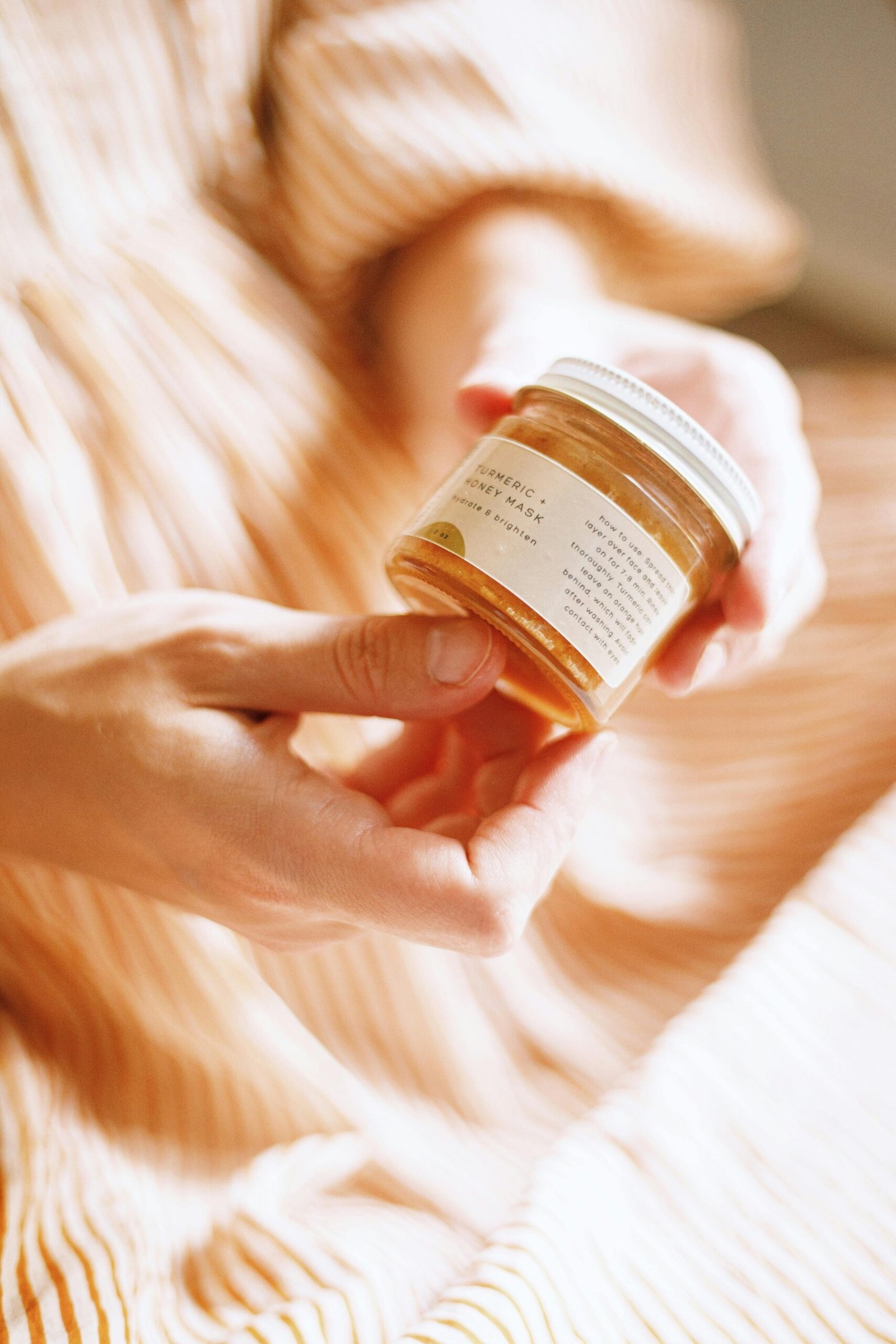
Personal care ingredient lists are longer, less standardized, and harder to parse than food labels. The names are less familiar, the conventions are less intuitive, and most products carry enough entries to make a thorough read feel impractical in the middle of a store aisle. Most people skip them entirely.
That’s a gap worth closing. The ingredient list is the most direct source of information about what’s actually in a product — more reliable than the front of the package, more specific than a certification, and more useful than a brand’s marketing language. Reading one doesn’t require a chemistry background. It requires knowing how they’re structured and where to focus.
How Personal Care Ingredient Lists Are Structured
Personal care ingredient lists follow the International Nomenclature of Cosmetic Ingredients standard — commonly referred to as INCI. INCI is a globally standardized naming system that assigns a consistent name to each ingredient regardless of what a brand chooses to call it in its marketing. Water is listed as “aqua.” Vitamin C appears as “ascorbic acid.” Plant-derived ingredients are listed using their Latin botanical names alongside or instead of their common names — aloe vera becomes “aloe barbadensis leaf juice,” coconut oil becomes “cocos nucifera oil.”
This standardization is useful once you’re familiar with it. The same ingredient will appear under the same INCI name across every product that contains it, which makes cross-product comparison more reliable than relying on common names that vary by brand.
Like food labels, personal care ingredient lists are organized in descending order by concentration — the ingredient present in the largest amount appears first, and the list works downward from there. This means the first several entries tell you what the product is primarily made of, and the entries toward the end are present in smaller amounts.
The 1% Concentration Threshold
The descending order convention has an important qualification that changes how the middle and end of a list should be read.
Ingredients present at a concentration of 1% or less can be listed in any order after the point where that threshold is reached. In practice, this means that once you move past the primary base ingredients — typically water, key emollients, and functional actives — the remaining entries may not reflect a clear concentration hierarchy. A preservative listed near the end may be present at 0.9%. A fragrance compound listed two entries before it may be present at 0.1%. Both are below the threshold and their relative order doesn’t tell you which is present in a larger amount.
Knowing this prevents over-interpreting position as concentration for the latter portion of a list. The first five to seven entries are the most reliably informative in terms of what the product is primarily built from. Below that threshold, position is less meaningful than presence.
What to Look at First
The opening entries of an ingredient list tell you what the product fundamentally is — its base formulation and primary functional ingredients.
Water — “aqua” — is the first entry in most liquid personal care products. Its position reflects its concentration, which in most lotions, serums, and cleansers is the largest single component by weight. What follows water tells you more about the product’s character.
Emollients and skin-feel agents — ingredients like glycerin, cetyl alcohol, shea butter, or various plant oils — typically appear early and form the moisturizing or conditioning base of the product. Their specific identity tells you something about the formulation philosophy: a product built on a base of plant oils and butters is structurally different from one built on silicones and synthetic emollients, even if both are positioned as moisturizing.
Active ingredients — the functional components a product is marketed around — should appear high on the list if they’re present in amounts that can actually do what they claim. An active ingredient buried at entry fifteen or sixteen, below a long list of emollients and thickeners, is present in a concentration that warrants scrutiny relative to the claims being made for it.
Reading the first five to seven entries gives you a working picture of what a product is primarily made of before you invest time in the rest of the list.
The Middle and End of the List
The latter portion of an ingredient list — everything below the 1% threshold — is where preservatives, fragrance, colorants, stabilizers, and other functional additives typically appear. These entries are present in smaller amounts but aren’t necessarily less relevant to how you evaluate the product.
Preservatives are required in most water-containing personal care products to prevent microbial growth. Their presence isn’t inherently a concern — some form of preservation is necessary for product safety. What’s worth noting is which preservatives are used. Parabens — methylparaben, propylparaben, butylparaben — are among the most widely used and have been linked to endocrine disruption and bioaccumulation in human tissue. Phenoxyethanol is a common paraben alternative. DMDM hydantoin and imidazolidinyl urea are formaldehyde-releasing preservatives that work by slowly releasing formaldehyde over time to inhibit microbial growth — worth knowing when you encounter them on a list.
Fragrance appears as a single entry — “fragrance” or “parfum” — regardless of how many individual compounds the formulation contains. As covered in a dedicated article, this entry represents one of the most significant gaps in personal care labeling. Its position on the list, whether near the middle or at the end, doesn’t change what it does or doesn’t disclose.
Colorants appear at the end of most lists and are required to be listed by their Color Index number — CI 77891 for titanium dioxide, CI 42090 for a common blue dye — or by their common name. Synthetic colorants are petroleum-derived and serve a purely aesthetic function in most personal care applications.
Botanical extracts often appear toward the end of a list, below the 1% threshold, in concentrations that may be largely symbolic. A product that features a plant extract prominently in its marketing but lists it as entry twenty-three is communicating something worth noting — the extract may contribute to the product’s positioning more than its formulation.
What Doesn’t Have to Be on the List
The ingredient list reflects what disclosure regulations require — and those requirements have gaps that are relevant to personal care specifically.
Fragrance compound disclosure is the most significant. As noted, “fragrance” or “parfum” as a single entry can cover dozens of individual compounds that aren’t individually disclosed. A product with a clean, minimal ingredient list that includes “fragrance” near the end still contains an unknown number of undisclosed compounds.
Processing aids — substances used during manufacturing that aren’t present in the final product at functional levels — aren’t required to appear on the label. Some carry over into the finished product in trace amounts without disclosure.
Contaminants aren’t listed because they aren’t intentional ingredients — but certain manufacturing processes and raw material sources introduce contaminants that can be present in finished products. 1,4-dioxane, a probable human carcinogen, is a byproduct of a common ingredient processing method and has been detected in products that contain no intentional harmful ingredients. It doesn’t appear on any label because it isn’t added — it forms as a byproduct. Third-party testing and certifications that screen for contaminants provide a layer of verification that the label alone can’t.
Tools Worth Using
A few resources make ingredient list reading more efficient without replacing the habit of reading the list yourself.
EWG Skin Deep is a database of personal care products and ingredients maintained by the Environmental Working Group. It assigns hazard scores to individual ingredients based on available safety data and flags specific concerns — skin sensitization, endocrine disruption, developmental toxicity — at the ingredient level. It’s most useful for looking up specific ingredients you encounter and want to understand better, or for getting a rapid overview of a product’s ingredient profile before reading the list in full.
Think Dirty is a similar database with a more consumer-facing interface, rating products and ingredients on a simplified scale. It covers a broad range of products and is useful as a quick reference, though its ratings reflect the database’s own methodology rather than regulatory standards.
Both tools are most effective as supplements to label reading rather than replacements for it. A database score gives you a starting point — reading the list yourself gives you the full picture, including the structural information that position, order, and category provide and that a single score can’t capture.
A Skill That Compounds
Reading a personal care ingredient list gets faster with practice. The INCI names that look unfamiliar on a first read become recognizable across repeated encounters — the same preservatives, emollients, and functional additives appear across many products, and recognizing them on sight reduces the cognitive load of reading any individual list.
The goal isn’t to analyze every product exhaustively before every purchase. It’s to know where to look — the first entries for base formulation, the latter entries for preservatives and fragrance, and the gaps for what the list doesn’t have to tell you — so that reading a label becomes a practical tool rather than an overwhelming one.
The framework is one piece of the picture. Browse our Personal Care articles to build on what you know — and make more informed choices about what goes on your body.



Leave a Reply