
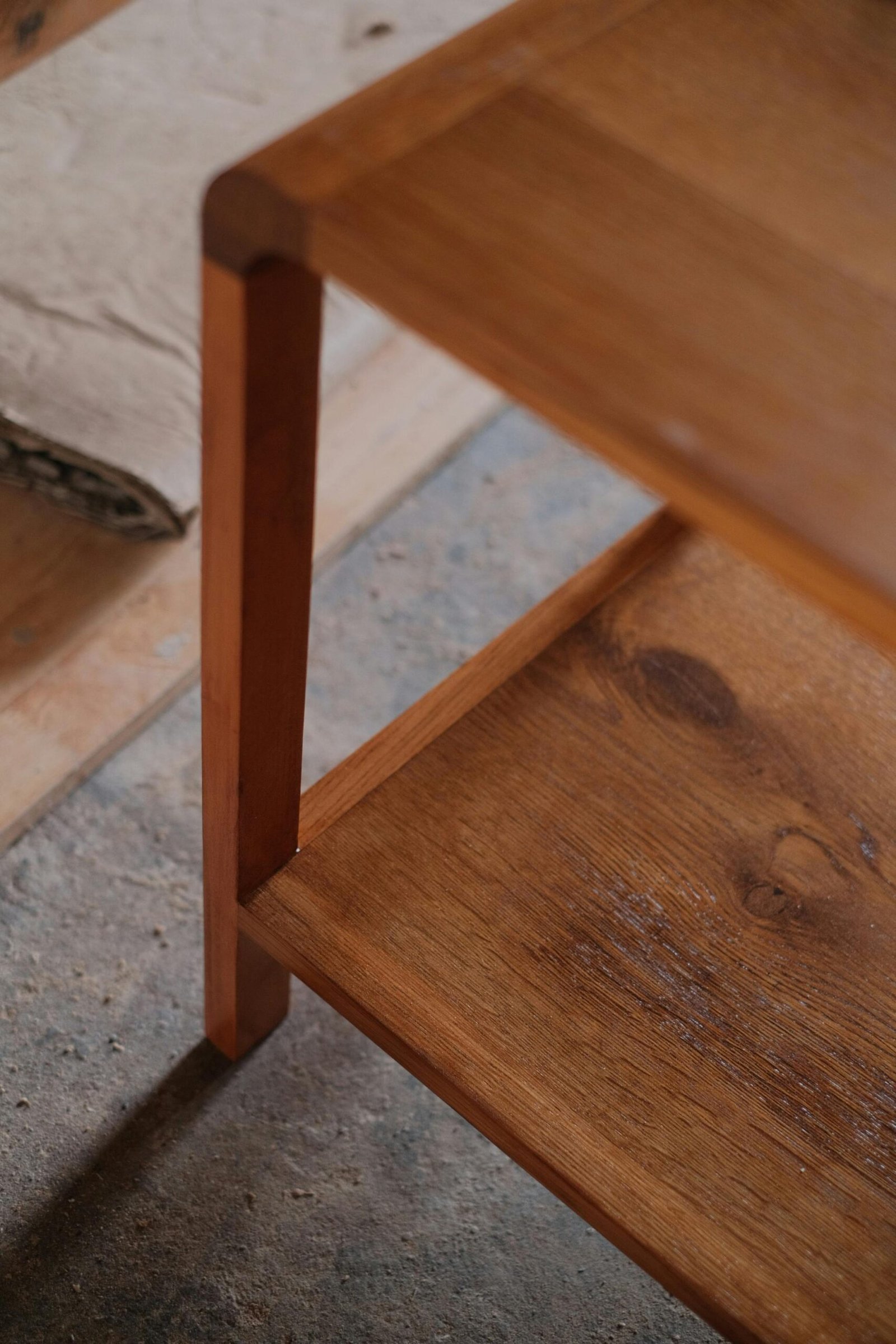
Most people evaluate furniture by how it looks and what it costs. The materials it’s made from — and what those materials contribute to the home environment over time — rarely factor into the decision until after the piece is already in the room.
Furniture is one of the longer-term material commitments most people make for their homes. A couch, a bed frame, a dresser — these are pieces that stay for years, in rooms where significant amounts of time are spent. What they’re made from, how they were finished, and what they continue to release into the air long after purchase are worth knowing before they come through the door rather than after.
This article gives you a practical framework for evaluating furniture materials before you buy — what to look for, what to ask, and where to focus first.
Why Furniture Materials Matter
Furniture contributes to the home environment in ways that aren’t immediately visible. The materials used in construction, upholstery, foam, and surface finishing can off-gas compounds into indoor air over time — a process covered in detail in our Volatile Organic Compounds at Home: A Plain-Language Guide. Unlike a cleaning product used once a week or a personal care product applied briefly, furniture is a continuous, long-duration source. A couch or mattress present in a room for ten years contributes to that room’s air quality across the full duration — most heavily when new, but tapering rather than stopping.
Skin contact is another story. Upholstered furniture — sofas, chairs, mattresses, bedding surfaces — maintains sustained contact with skin during use. What the fabric is made from and what treatments have been applied to it are relevant in the same way that personal care product ingredients are relevant, and for similar reasons.
As covered in Hidden Exposures in the Home: What Most People Overlook, furniture is one of the more significant and less examined exposure sources in a typical home. Evaluating it before purchase is the most practical intervention point — once a piece is in the home, the options for addressing its material profile narrow considerably.
Solid Wood vs. Composite Wood
The structural material in a piece of furniture is the starting point for any evaluation. The most important distinction is between solid wood and composite wood products.
Solid wood — lumber milled directly from timber — is the more straightforward option from a material standpoint. It doesn’t require adhesive resins to hold it together, which means it doesn’t off-gas formaldehyde from that source. It does carry a wood finish in most cases, which is addressed in its own section below. Solid wood furniture tends to be priced higher than composite alternatives and is worth identifying specifically — “wood” in a product description doesn’t always mean solid wood.
Composite wood products — particleboard, medium-density fiberboard (MDF), and plywood — are engineered from wood fibers, chips, or veneers bonded together with adhesive resins. Those resins — typically urea-formaldehyde or phenol-formaldehyde — off-gas formaldehyde over time, with emissions highest when the product is new and tapering gradually. Composite wood is the standard structural material in most flat-pack and mid-range furniture, and its presence isn’t always obvious from product descriptions or marketing materials.
CARB2 compliance is the most practical filter when evaluating furniture that contains composite wood. The California Air Resources Board’s Phase 2 standard sets strict limits on formaldehyde emissions from composite wood products and is currently among the most rigorous standards available for this category. Products sold in California are required to meet CARB2 standards, and many manufacturers apply it market-wide. Looking for CARB2 compliance on product pages or asking manufacturers directly is a straightforward way to assess the formaldehyde emission profile of composite wood furniture before purchasing.
Upholstery and Fabric
The fabric covering upholstered furniture — sofas, chairs, ottomans, headboards — is a direct skin contact surface and a source of sustained exposure that’s worth evaluating on its own terms.
Synthetic upholstery fabrics — polyester, nylon, acrylic, and microfiber — are petroleum-derived and can off-gas during use, particularly when new. They also tend to hold heat and moisture differently than natural fibers, which affects comfort and the microenvironment at the skin surface. Many synthetic fabrics are treated with additional finishes — stain resistance, water repellency — that add another layer of compounds to evaluate.
Natural fiber upholstery — wool, cotton, linen, and leather — is generally the more transparent option from a material standpoint. Each has its own considerations: cotton may be conventionally grown and treated, wool is naturally flame-resistant and often used as a flame barrier alternative to chemical treatments, and leather varies widely in the tanning and finishing processes used. Looking for organic or certified natural fiber upholstery where possible — and asking about specific treatments applied to the fabric — gives you a more complete picture than the fabric type alone.
Flame retardant treatments are applied to upholstered furniture foam and sometimes to fabric as a chemical treatment to meet federal flammability standards — something most consumers have no way of knowing from the product label alone. Many of the compounds historically used — certain brominated and chlorinated flame retardants — have been associated with endocrine disruption and have been detected in household dust. Some have been phased out, but replacements are not uniformly better evaluated. Looking for furniture that meets flammability standards through construction — wool as a natural flame barrier, for instance — rather than chemical treatment is a practical filter. Brands that explicitly disclose flame retardant-free foam are worth prioritizing when that information is available.
GOTS certification — the Global Organic Textile Standard — is the most rigorous reference point for organic fiber upholstery, covering fiber sourcing, processing, and finishing. OEKO-TEX Standard 100 evaluates finished textiles for harmful substances across every component. As covered in What Third-Party Certifications Actually Tell You, the two certifications answer different questions and are often complementary — GOTS speaks to how a textile was produced, OEKO-TEX speaks to what’s detectable in the finished product.
Foam and Fill
The fill material inside upholstered furniture and mattresses is one of the less visible but more relevant material choices to evaluate.
Polyurethane foam is the standard fill in most conventional upholstered furniture and mattresses. It’s petroleum-derived and can off-gas isocyanates and other compounds — most intensively when new. It also provides the substrate for most chemical flame retardant treatments, since the foam itself is flammable and meeting federal standards without chemical treatment requires an alternative barrier material.
Natural latex is one of the more common polyurethane alternatives in furniture and mattresses designed to minimize off-gassing. It’s derived from rubber tree sap and, in its natural form, is significantly lower in synthetic chemical content than polyurethane. Latex products vary in quality and composition — natural latex, synthetic latex, and blended latex are all available, and the distinction matters. Looking for GOLS certification — the Global Organic Latex Standard — confirms that a latex product meets organic sourcing and processing standards.
Wool and cotton batting are used as fill and flame barrier materials in furniture and mattresses built to minimize chemical content. Wool is naturally flame-resistant, making it a functional alternative to chemical flame retardants that meets flammability standards through material properties rather than treatment. Its presence as a flame barrier is worth specifically asking about when evaluating mattresses and upholstered furniture.
When a product description doesn’t specify foam type, asking the manufacturer directly — what foam is used, whether it’s CertiPUR-US certified, and what the flame barrier material is — produces more useful information than the listing alone.
Finishes, Stains, and Adhesives
Surface treatments are a VOC source that’s easy to overlook when evaluating furniture materials. A piece built from solid wood with a natural fiber upholstery can still contribute to indoor VOC levels through the finish applied to its wood surfaces.
Wood stains and finishes — lacquers, varnishes, and oil-based stains — contain solvents that off-gas during and after application, with emissions highest in the period immediately after manufacture and tapering over time. Water-based finishes and low-VOC formulations off-gas significantly less than conventional oil-based options. Asking whether a finish is water-based or low-VOC, or looking for this information on product pages, is worth doing for pieces that will live in enclosed spaces with limited ventilation.
Adhesives used in joinery and upholstery attachment are another source. Conventional adhesives can contain formaldehyde and other VOCs that contribute to the off-gassing profile of a finished piece. Low-VOC adhesive use is less commonly disclosed by manufacturers than wood or upholstery material, but it’s worth including in a direct inquiry to a brand when comprehensive material information is a priority.
GREENGUARD Gold certification is the most directly relevant certification for furniture VOC emissions — it evaluates finished products for low chemical emissions into indoor air and applies stricter limits for sensitive environments. A piece carrying GREENGUARD Gold certification has been independently tested against defined emission standards, which addresses the finish, adhesive, and composite wood off-gassing profile in a single evaluation.
A Practical Evaluation Framework
With a working understanding of what each material category contributes, evaluating a specific piece becomes more straightforward. A consistent set of questions covers the most relevant ground:
What is the primary structure made from? Solid wood, composite wood, or a combination — and if composite wood is present, is it CARB2 compliant?
What is the upholstery fabric? Natural or synthetic — and what treatments, if any, have been applied to it? Is there a relevant textile certification?
What is the foam or fill? Polyurethane or an alternative — and what is the flame barrier material? Is the foam CertiPUR-US certified at minimum, or does the product use a natural alternative?
What finish or stain has been applied to wood surfaces? Water-based or oil-based — and is a low-VOC formulation used?
Does the product carry any relevant certifications? GREENGUARD Gold for emissions, GOTS or OEKO-TEX for textiles, GOLS for latex — any of these represent independent verification of specific material claims.
Most of this information is available on brand websites or through direct inquiry. Brands that build furniture with material transparency in mind tend to make this information accessible — its absence is itself a signal worth noting.
Before It Comes Through the Door
Furniture is a long-term investment in more ways than one. A piece that off-gasses VOCs, carries chemical flame retardants, or is built from undisclosed composite materials contributes to the home environment across the full duration of its use — which for most furniture means years, not months.
The evaluation framework above doesn’t require exhaustive research for every purchase. It’s a set of questions that, once familiar, can be applied quickly and that produce meaningfully more useful information than price and appearance alone. The most practical point of intervention is before a piece enters the home — and the room-specific guide for the bedroom, coming soon, goes deeper on how these material considerations apply to the space where most people spend the most time.
The framework is one piece of the picture. Browse our Conscious Home articles to build on what you know — and make more informed choices about what you bring into your space.


Leave a Reply