
VOCs — volatile organic compounds — come up regularly in conversations about indoor air quality and non-toxic living, usually without much explanation. The term appears on paint labels, in discussions of furniture off-gassing, and on cleaning product packaging, but what it actually refers to — and why it matters in a home context — often goes unaddressed. In many cases, it functions more like a warning label than a clearly defined concept, which makes it harder to act on in a practical way. Without context, it’s difficult to know whether VOCs are something to be concerned about or simply another general category of environmental exposure. This gap between awareness and understanding is where most confusion tends to come from.
This article covers the basics: what VOCs are, where they come from in a typical home, what research suggests about indoor exposure, and what practical steps can help reduce it. The goal is not to present VOCs as an isolated issue, but as part of a broader picture of indoor air quality and environmental exposure. Understanding how they behave in indoor environments provides a clearer foundation for making decisions about products and materials. It also helps shift the conversation from general concern to more specific, actionable awareness. No technical background is required to follow along.
What VOCs Actually Are
Volatile organic compounds (VOCs) are carbon-containing chemicals that evaporate — or off-gas — at room temperature, releasing molecules into the surrounding air. “Volatile” refers to how easily they transition from a liquid or solid into a gas, which is why they are able to move into the air without heating or combustion. “Organic,” in this context, refers to their chemical structure, meaning they are carbon-based compounds, rather than anything related to organic farming or food labeling. This distinction is important because it often leads to misunderstandings about what VOCs actually are. In practice, VOCs are defined by their physical and chemical properties, not by how they are marketed or labeled.
VOCs are not a single substance but a broad category that includes thousands of individual compounds with different structures, sources, and effects. Some occur naturally, including compounds released by plants, wood, and certain foods, which means VOCs are not inherently synthetic or man-made. Others are produced during the manufacturing of materials, household products, and building components, making them more common in indoor environments. The distinction between natural and synthetic does not map cleanly onto safe and unsafe, which is an important nuance that often gets overlooked. What matters more is the specific compound involved, its concentration in the air, and the duration of exposure over time.
In indoor environments, VOCs behave differently than they do outdoors due to differences in air circulation and containment. Outdoor air is constantly moving and diluting airborne compounds, which reduces the likelihood of buildup in one place. Indoor air, especially in modern homes that are designed to be energy-efficient and tightly sealed, allows these compounds to accumulate more easily. Limited ventilation further contributes to this effect, particularly in spaces where windows are rarely opened or airflow is restricted. This dynamic is one of the main reasons indoor air quality has become a distinct area of research and public health interest.
Where They Come From in the Home
VOC sources in a typical home are more widespread than most people expect, and many are present in materials and products that don’t carry obvious warnings. Paint is one of the most well-documented sources, particularly in conventional formulations that rely on chemical solvents. These solvents release VOCs during application and can continue to off-gas for extended periods depending on environmental conditions. Compounds such as formaldehyde, benzene, and toluene are commonly associated with these emissions. While low-VOC and zero-VOC paints significantly reduce this output, they do not eliminate it entirely, especially once colorants are added.
Flooring and adhesives are another consistent source of VOCs within indoor environments, particularly in newly installed materials. Vinyl flooring, laminate, and engineered wood products can emit compounds from both the materials themselves and the adhesives used during installation. Solid hardwood generally produces fewer emissions compared to composite materials, though it is not entirely without impact. Installation methods that rely less on chemical bonding, such as mechanical fastening, can further reduce emissions. As with paint, emissions tend to be highest shortly after installation and decrease gradually over time.
Furniture and furnishings contribute to indoor VOC levels through a combination of materials and treatments used during manufacturing. Composite wood products such as particleboard, MDF, and plywood rely on adhesive resins that can release formaldehyde over time. Upholstered furniture introduces additional variables, including foam, fabric treatments, and coatings that may emit their own compounds. New furniture typically off-gasses most heavily in the first weeks or months after purchase, which is why allowing items to air out before placing them in enclosed spaces can be beneficial. This initial period often represents the highest level of exposure from a single item.
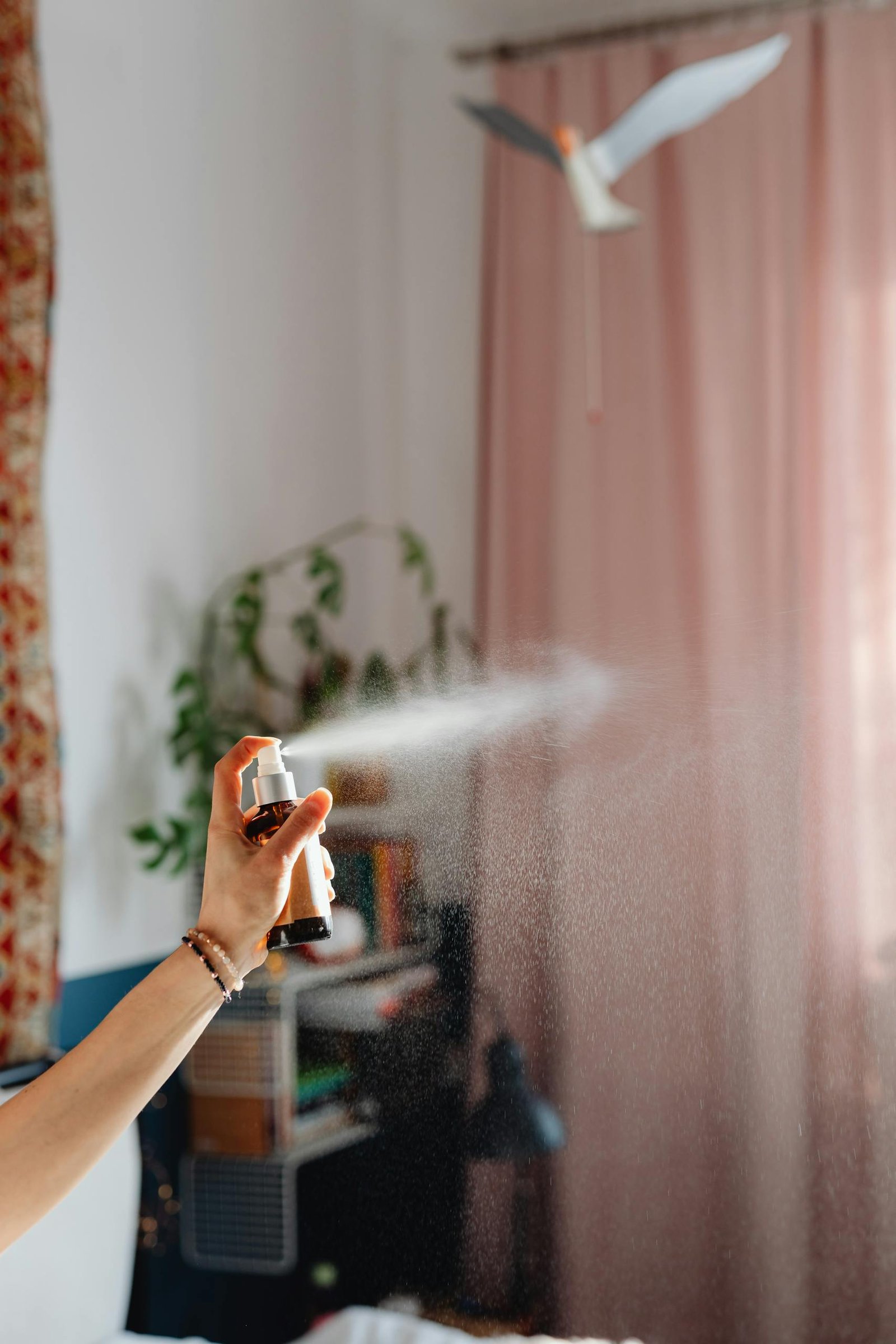
Cleaning products are a more immediate and controllable source of VOCs, as they are used frequently and in close proximity. Spray cleaners, degreasers, and products containing synthetic fragrance release compounds directly into the air during use. Aerosol formulations can add an additional layer of exposure through propellants that disperse particles more widely. Because these products are used repeatedly, they contribute to ongoing exposure rather than one-time emissions. This makes them one of the more practical areas to adjust when looking to reduce VOC levels.
Personal care products are another often-overlooked contributor, particularly in smaller enclosed spaces like bathrooms. Hairsprays, aerosol deodorants, nail products, and fragranced items all release compounds into the air during use. The confined nature of these spaces can lead to higher short-term concentrations, especially when ventilation is limited. Building materials such as insulation, sealants, and carpeting also contribute to background VOC levels over longer periods. Carpeting in particular can both emit and trap compounds, making it a cumulative factor in indoor air quality.
Why Indoor VOC Levels Matter
Research has shown that indoor VOC concentrations can exceed outdoor levels, particularly in enclosed or poorly ventilated environments. This difference becomes more relevant when considering how much time people typically spend indoors on a daily basis. Activities such as painting, installing new materials, or using certain cleaning products can temporarily increase these levels even further. In these situations, limited airflow can allow compounds to accumulate rather than dissipate. Over time, repeated exposure in enclosed environments becomes the more relevant factor to consider.
At higher concentrations, VOC exposure has been associated with short-term effects such as headaches, irritation of the eyes and throat, and dizziness. These effects are most commonly observed in situations involving strong products or limited ventilation, rather than typical day-to-day exposure. At lower concentrations, which are more common in residential settings, the research is more nuanced and continues to develop. Certain compounds, such as formaldehyde, have been studied more extensively and are classified as known human carcinogens at sustained exposure levels. Other VOCs, including benzene and toluene, are well understood in occupational settings, though long-term residential exposure is still being studied.
A useful way to approach VOCs in the home is through the concept of cumulative exposure rather than focusing on a single source. One product or material is unlikely to have a significant impact on its own under normal conditions. The more relevant factor is the combination of multiple sources contributing to indoor air over time. This includes building materials, furniture, cleaning products, and personal care items all interacting within the same environment. Understanding this cumulative effect helps clarify why small adjustments across multiple areas can be more meaningful than focusing on just one source.
How to Reduce VOC Exposure at Home
Reducing VOC exposure does not require replacing everything in a home at once, and in most cases, a gradual approach is more practical. Ventilation is the most immediate and accessible way to reduce indoor concentrations, as it helps remove accumulated compounds and bring in fresh air. Opening windows during and after activities like cleaning, painting, or bringing in new furniture can significantly lower VOC levels. Exhaust fans in kitchens and bathrooms serve a similar purpose in smaller or more enclosed spaces. In homes with limited natural airflow, air purifiers with activated carbon filters can help manage levels between ventilation periods.
Being aware of off-gassing periods can also make a noticeable difference in overall exposure. New furniture, mattresses, and flooring typically release higher levels of VOCs when first introduced into a space. Allowing these items to air out in a well-ventilated area before regular use can reduce the initial concentration indoors. When that isn’t possible, increasing ventilation in the room during the first few weeks helps mitigate buildup. This approach focuses on timing rather than complete avoidance, which is often more realistic.
Product substitution is another effective and practical strategy, particularly for items used regularly. Choosing low-VOC or zero-VOC paints, fragrance-free cleaning products, and non-aerosol formulations can reduce ongoing sources of exposure. Because these products are used frequently, even small changes can have a cumulative effect over time. Composite wood products are more difficult to avoid entirely, but standards such as CARB2 provide a useful benchmark when making purchasing decisions. Looking for these indicators helps narrow down options without requiring perfect conditions.
How to Evaluate Products for VOC Content
A few certifications and labeling systems can make evaluating VOC emissions more straightforward, especially when comparing similar products. GREENGUARD Gold certification is one of the most relevant for indoor environments, as it indicates that a product has been tested for low chemical emissions. The Gold standard applies stricter limits designed for sensitive environments such as schools and healthcare facilities. While it focuses specifically on emissions rather than overall ingredient safety, it provides a reliable point of reference. For home use, it is one of the more practical and widely recognized benchmarks available.
Low-VOC and zero-VOC labels, particularly on paint and building materials, reflect measurable reductions in solvent content. These labels are based on standardized testing and represent a meaningful improvement over conventional formulations. However, they are best understood as relative indicators rather than absolute guarantees of zero emissions. Additional components, such as tints or finishes, can introduce small amounts of VOCs even in low-VOC products. Using these labels as a filter rather than a definitive measure tends to be the most practical approach.
CARB2 compliance for composite wood products indicates that formaldehyde emissions meet California’s regulatory standards. These standards are among the strictest in the United States and are now widely adopted across the market. This designation is particularly relevant when evaluating furniture, cabinetry, and flooring that contain engineered wood components. While it does not eliminate emissions entirely, it sets a defined upper limit that helps reduce overall exposure. As with other certifications, it is most useful when used alongside other considerations rather than in isolation.
A Normal Feature of Most Homes
VOCs are present in most indoor environments to some degree, as they are a byproduct of the materials and products that make up modern homes. The goal is not complete elimination, which is not realistic in most settings, but a clearer understanding of where the most meaningful sources are. This perspective allows for more practical decision-making without requiring extreme or immediate changes. It also helps reframe VOCs as a manageable part of indoor air quality rather than an isolated issue. Awareness becomes the primary tool.
Ventilation, material choices, and product selection are the most practical levers available for managing VOC exposure. None of these require a full home overhaul, and each can be adjusted gradually over time. Small, consistent changes tend to have a more meaningful impact than attempting to address everything at once. As awareness builds, it naturally influences future decisions, from purchasing furniture to selecting everyday products. Over time, those decisions compound across the entire living environment.
VOCs are one part of a broader picture of indoor exposure. For an overview of what else to look for — materials, water quality, laundry, and more — read Hidden Exposures in the Home: What Most People Overlook. And browse our Conscious Home articles to keep building from here.



Leave a Reply