
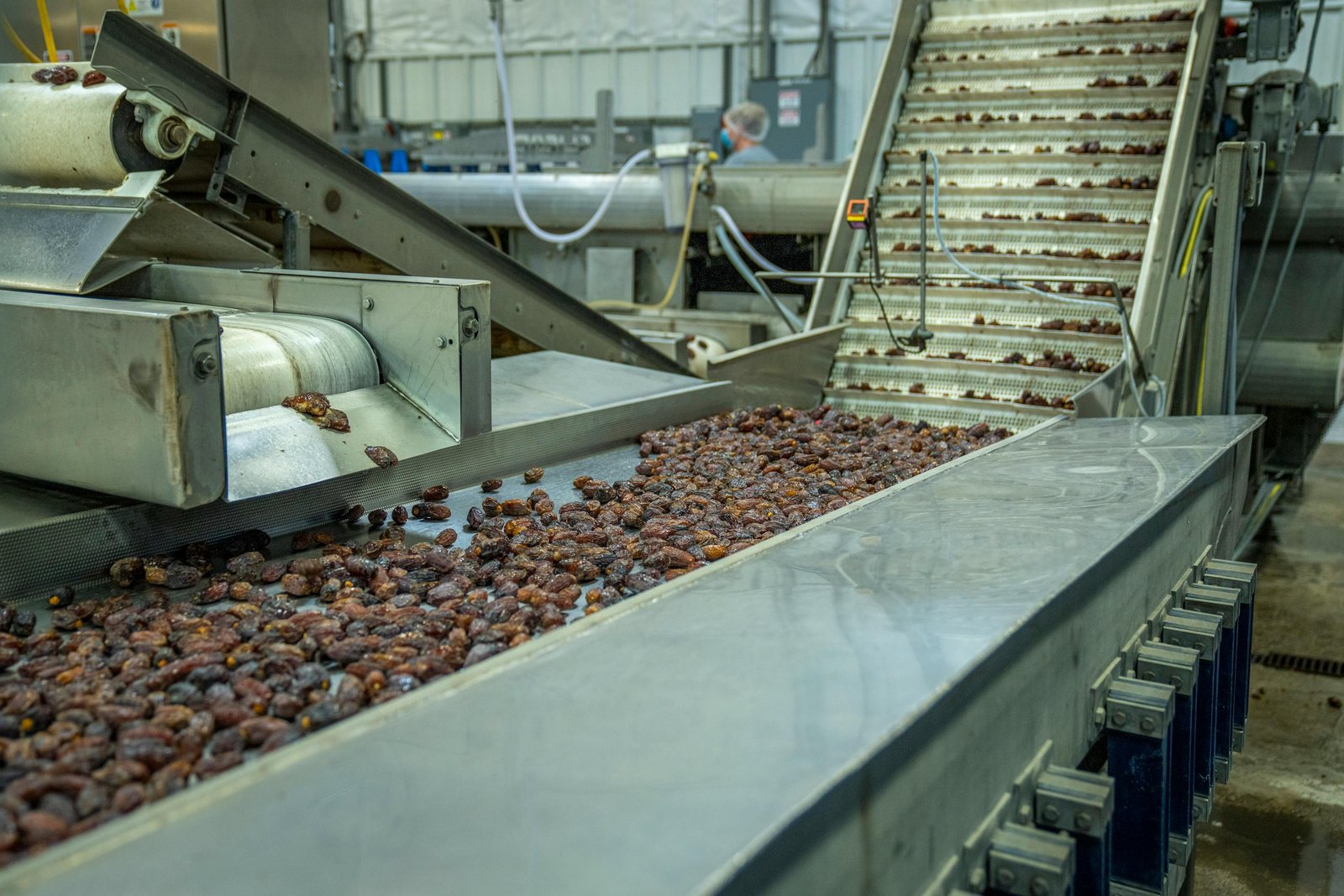
“Processed” is one of the most used and least defined terms in food conversations. It gets applied to everything from a bag of frozen vegetables to a fast food meal, which makes it more of a vague signal than a useful tool. When everything from canned tomatoes to packaged snack cakes falls under the same label, the word stops doing meaningful work.
The more useful question isn’t whether a food was processed — almost everything we eat has been in some way — but how and to what degree. That distinction changes what the term actually tells you, and makes it a more reliable part of how you evaluate what you’re eating.
What Processed Actually Means
At its most basic, food processing is any deliberate change made to a food before it’s consumed. By that definition, washing produce, cooking meat, freezing vegetables, and pasteurizing milk are all forms of processing. So is adding twelve synthetic additives to a shelf-stable snack formulated to maximize palatability. The word covers all of it, which is why it communicates so little on its own.
What varies across types of processing is purpose and degree. Some processing is purely practical — it makes food safe, extends its usable life, or makes it accessible outside of its growing season. Canning, fermenting, freezing, and drying all fall into this category. They change a food’s form without fundamentally altering its composition or introducing compounds that weren’t there originally.
Other processing goes further — refining ingredients, combining them with additives, flavoring agents, and stabilizers, and engineering the result for specific taste, texture, and shelf life outcomes. The end product may share little with the whole food ingredients it nominally contains. This is where the meaningful distinctions begin to emerge.
The NOVA Classification System
The most widely referenced framework for thinking about degrees of processing is the NOVA classification, developed by researchers at the University of São Paulo. Rather than treating processing as a binary, NOVA organizes food into four groups based on the extent and purpose of industrial processing involved.
Group 1 — Unprocessed or minimally processed foods are whole foods in their natural state or foods that have been minimally altered without the addition of substances. Fresh fruit, vegetables, plain meat, eggs, milk, and plain grains fall here. Processes like washing, cutting, refrigerating, fermenting, and pasteurizing are included — the defining characteristic is that nothing has been added and the food’s fundamental nature hasn’t been changed.
Group 2 — Processed culinary ingredients are substances extracted from Group 1 foods and used in cooking and food preparation. Oils, butter, flour, sugar, and salt fall into this category. They’re not typically eaten on their own but are used to prepare and cook whole foods. The key distinction is that they’re derived directly from natural sources without the addition of other substances.
Group 3 — Processed foods are products made by adding Group 2 ingredients to Group 1 foods, typically to extend shelf life or enhance flavor. Canned vegetables with added salt, cured meats, cheese, and freshly baked bread are examples. They’re recognizable as derived from whole food sources and contain a small number of added ingredients with a clear functional purpose.
Group 4 — Ultra-processed foods are industrial formulations made mostly or entirely from substances extracted from foods, with little to no whole food present in the final product. They typically contain additives — emulsifiers, stabilizers, artificial and natural flavors, colorants, sweeteners — that aren’t used in home cooking and exist to replicate sensory qualities, extend shelf life, or enhance palatability. Packaged snacks, carbonated beverages, flavored dairy products, instant noodles, and most breakfast cereals fall into this group.
The NOVA framework doesn’t require memorizing ingredient lists or nutrition panels. It’s a structural way of asking what a food fundamentally is — whole, minimally altered, or industrially formulated.
What Ultra-Processed Foods Actually Contain
The defining feature of ultra-processed foods isn’t any single ingredient — it’s the combination of refined inputs, functional additives, and flavor engineering that characterizes the category as a whole.
Refined ingredients — stripped of fiber, water, and many naturally occurring compounds during processing — form the base of most ultra-processed formulations. Refined flour, refined oils, and isolated protein and starch concentrates are common examples. Refining increases shelf stability and allows for precise formulation, but the process removes components present in the whole food source.
Additives perform specific technical functions in the final product. Emulsifiers like lecithin and polysorbate 80 maintain texture and prevent separation. Stabilizers prevent ingredient breakdown over time. Humectants retain moisture. Colorants maintain visual consistency. Many of these compounds are broadly considered safe at individual exposure levels — the more active research question is around cumulative dietary exposure across the range of products that contain them.
Flavor compounds — both artificial and natural — are used to deliver consistent taste profiles independent of ingredient quality or seasonal variation. As covered in our label reading article, both categories are protected as trade secrets and don’t require individual component disclosure. A product listing “natural flavor” may contain a complex blend of compounds whose full composition isn’t publicly available.
Added sugars appear in forms that extend well beyond obvious sweetness. High fructose corn syrup, dextrose, maltose, cane juice, and barley malt are all added sugars that appear under different names in ingredient lists. Their presence in savory products — bread, condiments, sauces — is common and not always apparent from the front of the package.
The cumulative picture is a formulation built for shelf stability, sensory appeal, and consistency — outcomes that don’t require whole food ingredients and are largely incompatible with them.
Why It Matters
The research connecting ultra-processed food consumption to health outcomes has grown substantially over the past decade. Large observational studies have found associations between high ultra-processed food intake and elevated risk of cardiovascular disease, type 2 diabetes, certain cancers, and all-cause mortality. A 2019 randomized controlled trial published in Cell Metabolism — one of the few to directly compare ultra-processed and unprocessed diets under controlled conditions — found that participants on an ultra-processed diet consumed significantly more calories and gained weight compared to those on an unprocessed diet, despite being offered equivalent nutritional profiles on paper.
It’s worth being clear about what this research does and doesn’t establish. Most of the evidence is observational, meaning it identifies associations rather than direct causation. Ultra-processed food consumption tends to correlate with other dietary and lifestyle factors that also affect health outcomes, which makes isolating the specific contribution of processing difficult. What the research does consistently show is a directional signal strong enough to take seriously — and a gap between what nutrition panels report and what dietary patterns actually produce in practice.
The NOVA framework was developed partly in response to this gap. Nutrition science spent decades focused on individual nutrients — fat, carbohydrates, specific vitamins and minerals — with limited success in translating that focus into population-level health improvements. The degree of processing as a variable captures something that nutrient-by-nutrient analysis doesn’t: what happens to food when it moves from whole ingredients to industrial formulation, and why two products with similar nutrition panels can produce meaningfully different outcomes.
How to Use This in Practice
The NOVA classification is a useful mental model, not a strict sorting system. Applying it in practice doesn’t require categorizing every food you eat — it means developing a working sense of where things fall on the spectrum and using that as one input among several.
A few practical applications:
Whole and minimally processed foods — Group 1 — form the most straightforward foundation. Fresh produce, plain grains, eggs, plain dairy, and unprocessed meat don’t require label evaluation beyond the basics.
Group 3 processed foods — canned goods, fermented products, cheese, bread with short ingredient lists — are generally worth evaluating by ingredient rather than by category. A can of tomatoes with one ingredient is a different product from a canned soup with twenty.
Group 4 ultra-processed foods are where label reading becomes most relevant. The ingredient list structure — order by weight, the presence of additives and flavor compounds, added sugars under multiple names — gives you the most information about what you’re actually evaluating. The ingredient list gives you the most direct read on what you’re actually buying.
The goal isn’t to eliminate processed food entirely — that’s neither realistic nor necessary. It’s to understand where something falls on the spectrum, what that means for its composition, and make decisions with that context rather than without it.
A Spectrum, Not a Binary
Processing is a feature of almost everything we eat. The question is always degree — how far a food has moved from its whole ingredient sources, what was added in that process, and for what purpose. NOVA gives that question a workable structure.
Knowing where a food falls on that spectrum doesn’t require avoiding entire categories. It requires enough familiarity with the framework to recognize the difference between a minimally processed food and an industrially formulated one — and to factor that distinction into the choices that are easiest to act on first.
Browse our starter guides for practical next steps on building a lower-toxin home.



Leave a Reply