
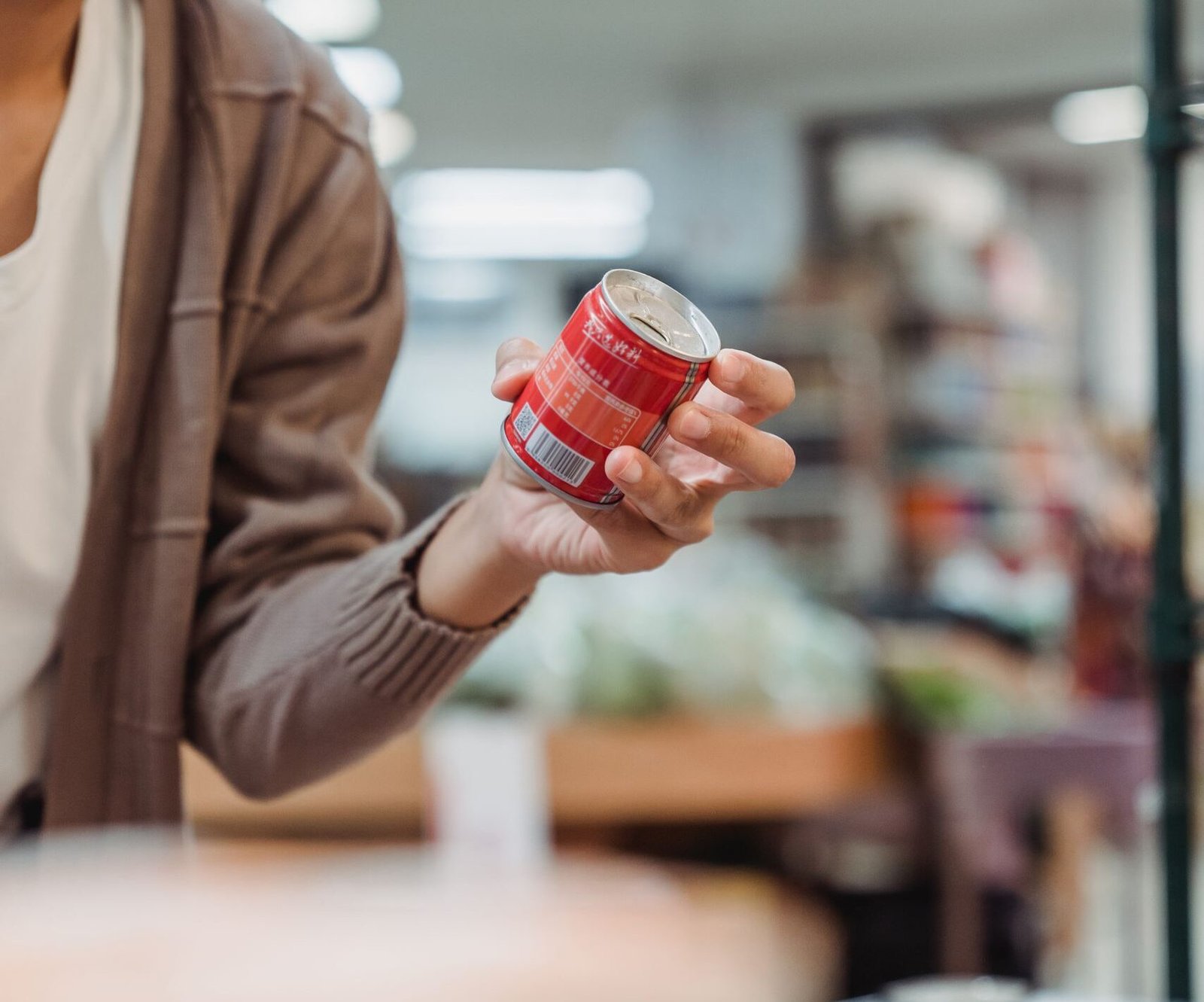
Most people were never taught how to read a food label. It isn’t covered in school, rarely comes up in the context of everyday purchasing, and yet it’s one of the most consistently useful skills available for evaluating what goes into the body on a daily basis. The gap isn’t a personal failing — it’s structural. Food packaging is designed to direct attention toward the front of the package, where marketing language and visual hierarchy do most of the work. The ingredient list and nutrition facts panel, where the more useful information sits, are on the back.
Research by Varela et al. found that front-of-package attributes — imagery, claims, and visual design — capture consumer attention and drive perceived product differences more reliably than ingredient or nutritional information. Packaging, in other words, is optimized for the front. Reading a label with any depth requires deliberately redirecting attention to where that optimization isn’t happening.
This article builds a working framework for doing that — going beyond calorie counts and macros to the parts of the label that tell you the most about what’s actually in the product.
Start With the Ingredient List
The nutrition facts panel gets most of the attention, but the ingredient list is the more informative starting point for evaluating what a product actually contains.
Ingredients are listed in descending order by weight — whatever appears first makes up the largest proportion of the product by volume. This has practical implications. A product marketed around a specific ingredient — oats, berries, a particular protein source — may list that ingredient several entries down, behind water, sugar, or refined flour. The order tells you what the product is primarily made of, regardless of what the front of the package emphasizes.
Ingredients present at a concentration of 1% or less can be listed in any order after the point where that threshold is reached. In practice, this means that once you move past the primary base ingredients, the remaining entries may not reflect a strict concentration hierarchy. A preservative listed near the end may be present at 0.9%. A flavoring listed two entries before it may be present at 0.1%. Both are below the threshold and their relative order doesn’t tell you which is present in a larger amount. Position is most reliably informative for the first five to seven entries — below that threshold, presence matters more than position.
The length and complexity of the ingredient list is itself a useful signal. A long list of additives across multiple functional categories — preservatives, emulsifiers, colorants, and flavor compounds all present in the same product — is a reliable indicator of how far that product has moved from whole food sources. As covered in What Processed Really Means — and Why It Matters, ultra-processed foods rely structurally on additives in ways that less processed foods don’t — and the ingredient list is where that structure becomes visible.
Reading the ingredient list before the nutrition facts panel reframes the evaluation. The panel tells you quantities; the ingredient list tells you what those quantities are made from.
Understanding the Nutrition Facts Panel
The nutrition facts panel is more useful when you understand its structure and its limits.
Serving size is the first thing to calibrate. All values on the panel — calories, sodium, sugar, fat — are calculated per serving, and serving sizes are set by the manufacturer within FDA guidelines. A bag of chips listed as 2.5 servings, or a beverage container that technically contains 2 servings, means the numbers on the panel need to be multiplied to reflect what most people actually consume in a sitting. The 2016 FDA label update required manufacturers to use more realistic serving sizes for some categories, but the practice of setting serving sizes below typical consumption patterns is still present across many products.
Percent daily values are calculated against a 2,000 calorie reference diet — a generalized benchmark rather than an individual recommendation. A nutrient listed at 20% DV isn’t necessarily significant or insignificant for any given person. The panel is more useful as a relative comparison tool between similar products than as an absolute nutritional guide.
What the panel doesn’t capture is also worth noting. It reflects nutrient quantity, not ingredient quality. Two products can show identical macronutrient profiles with entirely different ingredient lists — one built from whole food sources, the other from refined inputs, additives, and isolates. The panel can’t communicate that distinction. The ingredient list can.
Additives, Preservatives, and Flavor Compounds
Beyond core ingredients, most packaged foods contain functional additives — compounds added to extend shelf life, improve texture, stabilize emulsification, or enhance flavor. They’re required to appear in the ingredient list, but their names aren’t always immediately recognizable.
Preservatives prevent microbial growth and oxidation in products designed for extended shelf life. Common ones include sodium benzoate, potassium sorbate, BHA, and BHT. As covered in What Food Additives Actually Are — and Why They’re Worth Understanding, BHA has been listed by the National Toxicology Program as reasonably anticipated to be a human carcinogen based on animal studies. Knowing which preservatives a product uses is one of the more practical things the end of an ingredient list can tell you.
Emulsifiers and stabilizers maintain texture and prevent separation. Lecithin, carrageenan, xanthan gum, and polysorbate 80 are among the most commonly encountered. Research has raised questions about the effects of certain emulsifiers on gut microbiome composition at cumulative dietary exposure levels — an area covered in more depth in the food additives article.
Flavor compounds are two of the most frequently misunderstood entries on an ingredient list. Artificial flavors are synthesized compounds designed to replicate a taste. Natural flavors — despite the name — is a broad regulatory category that covers any flavor compound derived from a natural source regardless of how extensively it has been processed. Neither term tells you what specific compounds are present, as flavor formulations are protected as trade secrets and don’t require individual component disclosure.
Added sugars have their own line on the updated nutrition facts panel, which helps distinguish them from naturally occurring sugars in ingredients like fruit or dairy. In the ingredient list, added sugars appear under a wide range of names — high fructose corn syrup, cane juice, dextrose, maltose, barley malt, and others. A dedicated article coming to this category goes deeper on how to identify added sugars across their full range of label names and what long-term consumption means for health — including their documented role in inflammation, metabolic disruption, and hormonal signaling.
For those who want to look up specific substances that appear in food, the FDA maintains a publicly accessible database of food ingredients and packaging substances at hfpappexternal.fda.gov — a useful additional layer of reference when researching compounds you encounter on an ingredient list.
Front-of-Package Claims
Front-of-package claims — “natural,” “made with whole grains,” “no artificial preservatives,” “clean” — are marketing language regulated to varying degrees, and evaluating them against the ingredient list rather than taking them at face value is one of the more consistently useful label reading habits.
As covered in What “Natural” on a Food Label Actually Means, “natural” has no federal definition and can appear on products that contain conventionally grown ingredients, GMO-derived inputs, and additives. A product that says “made with whole grains” may list whole grain flour several entries down behind refined flour — the claim is technically accurate, but the ingredient list tells you how significant that contribution actually is.
“No artificial preservatives” tells you something specific — that the preservatives used are naturally derived rather than synthetic — but doesn’t tell you that no preservatives are present, or that the naturally derived ones used are without concern. “Clean” as a front-of-package claim carries no federal definition and varies widely in what it actually means across brands, as covered in What “Clean Beauty” Actually Means — and What It Doesn’t — a dynamic that applies equally to food labeling.
The consistent approach is to treat front-of-package claims as a starting point rather than a conclusion — a signal that a product wants to be associated with certain qualities, evaluated against what the ingredient list actually confirms.
What the Label Doesn’t Have to Tell You
The label reflects what disclosure regulations currently require — and those requirements have meaningful gaps that are relevant to everyday purchasing decisions.
Flavor formulations don’t require individual compound disclosure. A product can list “natural flavor” or “artificial flavor” as a single entry while that entry represents a complex blend of compounds whose full composition isn’t publicly available. The trade secret protection that keeps these formulations undisclosed leaves the door open to a wide range of substances appearing in a product without any way for the consumer to know — a gray area that applies equally to both natural and artificial flavor designations.
Contaminants aren’t listed because they aren’t intentional ingredients — but certain manufacturing processes and raw material sources introduce contaminants that can be present in finished products without appearing on any label. 1,4-dioxane, a probable human carcinogen, is a byproduct of a common ingredient processing method and has been detected in products that contain no intentional harmful ingredients. Third-party testing and certifications that screen for contaminants — like Clean Label Project — provide a layer of verification that the label alone can’t. For those who want to go a step further, seeking out brands that carry B Corp certification is worth considering — it evaluates a company’s full operational standards including manufacturing practices, which speaks to the conditions under which contaminants are most likely to be introduced or avoided.
Allergen labeling gaps have real health consequences beyond general wellness considerations. Research by Simons et al. found that ingredient labeling practices — including precautionary allergen statements and shared equipment disclosures — created significant confusion and risk for food allergic consumers, who reported difficulty determining whether a product was safe based on label information alone. The study highlighted that what’s present on a label, and how it’s communicated, directly affects the ability of consumers to make safe decisions — a gap that extends beyond allergen-specific concerns to the broader question of what labeling is and isn’t required to disclose.
Produce and protein sourcing represent another significant disclosure gap. Fresh fruits and vegetables carry no ingredient list, and there is no requirement to disclose what pesticides were used during growing, how the crop was treated post-harvest, or what the soil and farming conditions looked like. The label tells you what the product is — not how it got there.
The same applies to animal proteins. How an animal was raised, what it was fed, and how it was processed before reaching the shelf are factors that affect the quality and composition of the final product — and none of it is required to appear on a standard product label. Terms like “grass-fed,” “pasture-raised,” and “free-range” appear voluntarily and carry varying degrees of verification — a topic covered in depth in a dedicated article coming soon.
This is where third-party certifications fill a gap that the label itself can’t. USDA Organic on produce confirms that synthetic pesticides and fertilizers weren’t used in growing. Non-GMO Project Verified confirms GMO avoidance through independent testing. Clean Label Project tests finished products for contaminants that don’t appear on labels at all. As covered in What Third-Party Certifications Actually Tell You, certifications aren’t a complete answer — but in categories where the label is structurally limited in what it discloses, they provide a layer of verification that ingredient list reading alone can’t.
Packaging material migration is another gap. What a food is packaged in can affect what’s in the food — compounds from packaging can migrate into food under certain conditions. None of this appears on the label.
Knowing these gaps doesn’t make label reading less useful — it clarifies what the label can and can’t answer, and makes it more useful as one tool among several.
A Transferable Skill
Label reading isn’t specific to food. The same orientation — what’s actually in this, in what proportion, and what isn’t being disclosed — applies to personal care products, cleaning products, and most other labeled goods. The ingredient list structure, the gap between marketing language and formulation reality, the limits of what disclosure requires — these are consistent across categories.
Building the habit with food labels is a practical starting point because food labels are the most standardized and the most frequently encountered. The same instincts carry forward into every other labeled product category from there — and the more familiar the framework becomes, the faster and more intuitive it gets to apply.
Ready to keep going? Browse our Mindful Eating articles to build a clearer picture of what’s in your food and how to evaluate it.


Leave a Reply