
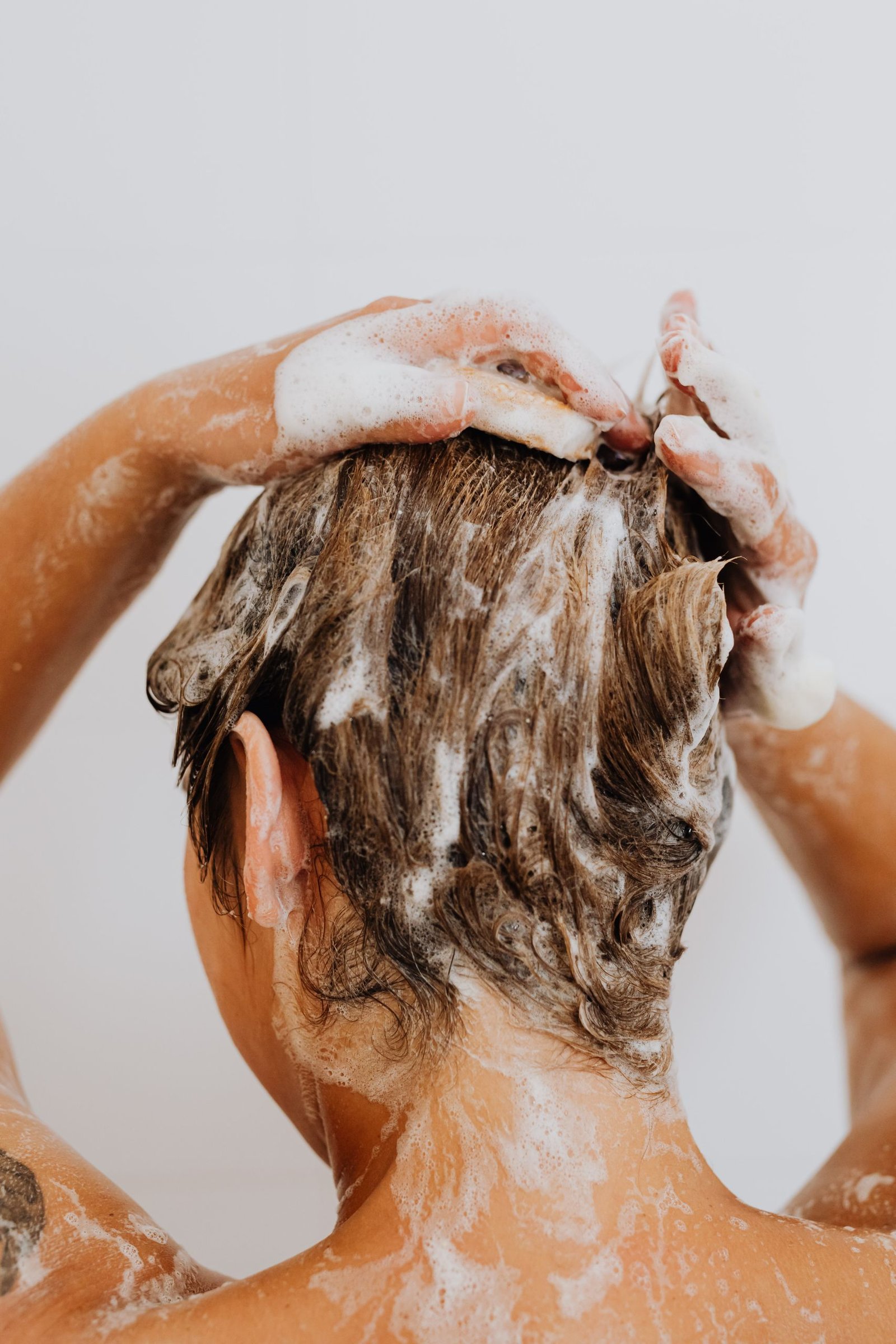
The widespread belief that parabens have already been phased out of personal care is one of the more common misconceptions in the ingredient awareness space. Paraben-free labeling is everywhere — but so are parabens themselves, in a significant share of conventional products still sold in the U.S. Parabens are one of the most discussed ingredient classes in personal care — and also one where the gap between what people have heard and what the research actually shows is worth closing.
What Parabens Actually Are
Parabens are a class of synthetic preservatives — chemical compounds added to personal care products to prevent the growth of bacteria, mold, and yeast. Their full chemical name is alkyl esters of para-hydroxybenzoic acid, which is where the name paraben comes from. In simpler terms, they’re a group of closely related compounds that share the same basic chemical structure but differ in the length of their carbon chain — a difference that turns out to matter for their behavior in the body.
Preservatives are a necessary component of most water-containing personal care products. Water creates an environment where microorganisms grow — without some form of preservation, a moisturizer, shampoo, or body wash would become contaminated quickly enough to present a genuine health risk. As Al-Halaseh et al. documented in their review of parabens in cosmetics, the preservative function parabens perform is real and important — they’re effective at low concentrations, stable across a wide pH range, and compatible with most formulation types. This is why they became the most widely used preservative class in personal care over the second half of the twentieth century.
What makes them worth examining is what happens once they’re absorbed into the body — which, given the range of products they appear in and the frequency with which those products are applied, is something that happens consistently for most people who use conventional personal care.
Where They Show Up
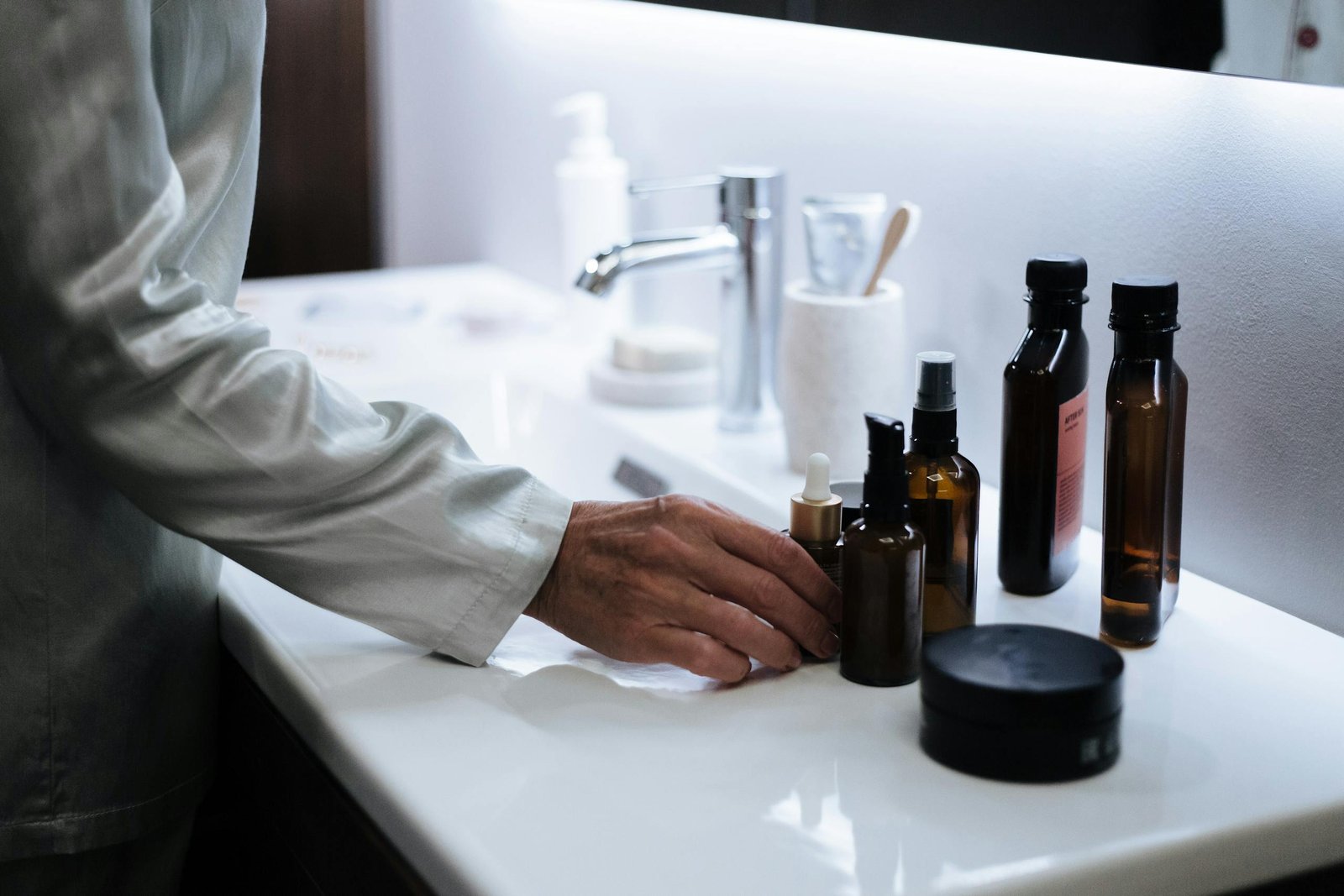
Parabens are used across a wide range of personal care product categories — moisturizers, body lotions, shampoos, conditioners, face washes, makeup including foundation and mascara, deodorants, and some sunscreens. They appear toward the end of ingredient lists because they’re present at low concentrations — typically less than 1% individually — but across multiple products used daily, the cumulative exposure adds up across sources simultaneously.
On an ingredient list, parabens appear under their specific names — the most common being methylparaben, ethylparaben, propylparaben, and butylparaben. Isobutylparaben and isopropylparaben appear less frequently. All of them end in “-paraben,” which makes them one of the more identifiable ingredient classes on a label once you know what you’re looking for. Cashman and Warshaw’s foundational review of paraben epidemiology documented their widespread presence across product categories and noted that exposure through multiple simultaneous products — rather than through any single one — is the more relevant frame for understanding cumulative intake.
What the Research Shows
The concern with parabens centers on their estrogenic activity — their ability to bind to estrogen receptors in the body and trigger responses similar to those produced by the body’s own estrogen. This was first documented in the 1990s and has been confirmed and expanded on across subsequent research.
Błędzka, Gromadzińska, and Wąsowicz’s review of parabens from environmental studies to human health documented the detection of parabens in human urine, blood, and breast tissue — confirming that parabens are absorbed through the skin and accumulate in human tissue rather than simply sitting on the surface and being washed away. Their detection in breast tissue specifically has been a persistent and significant finding in the research literature — one that has informed both regulatory responses and consumer concern.
Wei et al.’s 2021 review classified parabens as chemicals of emerging concern in both the environment and human health contexts — documenting their environmental persistence, their detection across biological samples globally, and the range of health associations that have accumulated across the research literature. Their review noted that parabens have been detected in wastewater, surface water, and soil — reflecting both their widespread use and their resistance to complete environmental degradation.
Fransway et al.’s comprehensive review of parabens published in Dermatitis documented contact sensitization as a documented concern — while parabens have historically been considered low-sensitizing relative to other preservative classes, their widespread presence across multiple product categories means that sensitized individuals encounter them across a broad range of products rather than in isolated instances.
Hendryx and Luo’s 2022 population-level study of paraben exposure and total mortality in U.S. adults found significant associations between higher urinary paraben concentrations and increased mortality risk across a nationally representative sample — one of the more significant epidemiological findings in the paraben literature and one that reflects cumulative systemic exposure rather than a single product’s contribution.
The Longer-Chain vs. Shorter-Chain Distinction
Not all parabens are equal in terms of their estrogenic potency — and this distinction is where the regulatory responses in the EU and the U.S. diverge most clearly.
Parabens differ in the length of their carbon chain — methyl and ethyl parabens have shorter chains, while propyl and butyl parabens have longer ones. As Boberg et al. documented in their research on endocrine disrupting effects of parabens and their metabolites, longer-chain parabens — particularly butylparaben — show significantly stronger estrogenic activity than shorter-chain variants in laboratory studies. Butylparaben has shown estrogenic effects at lower concentrations than methylparaben, and its metabolites — the compounds the body produces when breaking it down — also show hormonal activity.
The EU’s Scientific Committee on Consumer Safety has restricted butylparaben and propylparaben in cosmetics applied to the diaper area of infants and young children, and has set lower concentration limits for these longer-chain parabens in leave-on cosmetics more broadly — reflecting the scientific consensus that chain length is a relevant variable in paraben safety assessment. The U.S. FDA has not implemented similar restrictions, maintaining that parabens as currently used in cosmetics are safe — a position that reflects the different regulatory philosophy covered in the personal care regulation article.
Chatterjee et al.’s 2024 comprehensive review — one of the most recent and thorough assessments of the paraben literature — documented the evidence base for both the preservative benefits and the health concerns across the full paraben class, noting that while the data on longer-chain parabens is more extensive, the cumulative exposure from multiple shorter-chain parabens simultaneously raises questions that single-compound assessments at low concentrations don’t fully address.
What “Paraben-Free” Actually Means
The “paraben-free” label on personal care products tells you one specific thing — that the listed paraben compounds are absent from the formulation. It doesn’t tell you what replaced them.
When parabens are removed from a formulation, something else has to perform the preservation function — and the alternatives vary widely in how well they’ve been characterized. Phenoxyethanol is currently the most common paraben replacement — it’s broadly considered safer than the longer-chain parabens based on available data, but it has its own research questions around reproductive toxicity at higher concentrations and is being studied with increasing attention as its use has expanded dramatically. Formaldehyde-releasing preservatives — DMDM hydantoin, imidazolidinyl urea, and diazolidinyl urea — are used in some paraben-free formulations and release low levels of formaldehyde over time, which carries its own documented concerns. Methylisothiazolinone and methylchloroisothiazolinone have been associated with significant rates of contact sensitization and have been restricted in leave-on cosmetics in the EU.
The paraben-free designation is a useful starting point — it confirms that a specific class of compounds with documented concerns has been excluded. What’s in their place is the more complete question, and it’s one that the label’s front-of-package claim doesn’t answer. Reading the full ingredient list — particularly the preservative section toward the end — gives you the information that “paraben-free” alone doesn’t provide.
Practical Steps
Reducing paraben exposure across a personal care routine is straightforward once you know what to look for.
On an ingredient list, all parabens end in “-paraben” — making them one of the easier ingredient classes to identify without specialized knowledge. Butylparaben and propylparaben are worth prioritizing for reduction given their stronger estrogenic activity. Leave-on products — moisturizers, body lotions, deodorants, and sunscreens — that stay in contact with skin for extended periods are the most relevant to address first, since contact time affects how much is absorbed through the skin.
Third-party certifications provide independent verification that parabens have been excluded — EWG Verified restricts all parabens. MADE SAFE screens for endocrine-disrupting compounds including parabens as part of its full ingredient review. As covered in What Third-Party Certifications Actually Tell You, these certifications also evaluate what replaced the excluded ingredients — which is what the paraben-free label alone doesn’t tell you.
The EWG Skin Deep database and INCIDecoder are practical tools for evaluating specific paraben alternatives encountered in ingredient lists — giving you the information to assess not just whether parabens are absent but whether their replacements are a meaningful improvement.
The Evidence Is Specific Enough to Act On
Parabens are one of the more thoroughly researched preservative classes in personal care — which means the evidence for concern is also more specific than for many other ingredient categories. Estrogenic activity, detection in human tissue, population-level mortality associations, and stronger effects from longer-chain variants are findings that have accumulated across decades of research and across multiple study types and geographic locations.
The practical response doesn’t require avoiding every product with any paraben in it. It means understanding which parabens carry the most documented concern, prioritizing reduction in leave-on products with sustained skin contact, reading past the “paraben-free” label to what replaced them, and using the certification and ingredient database tools that do that evaluation more systematically.
The references used in this article are a starting point — we encourage you to read further and draw your own conclusions.
The framework is one piece of the picture. Browse our Personal Care articles to build on what you know — and make more informed choices about what goes on your body.


Leave a Reply