
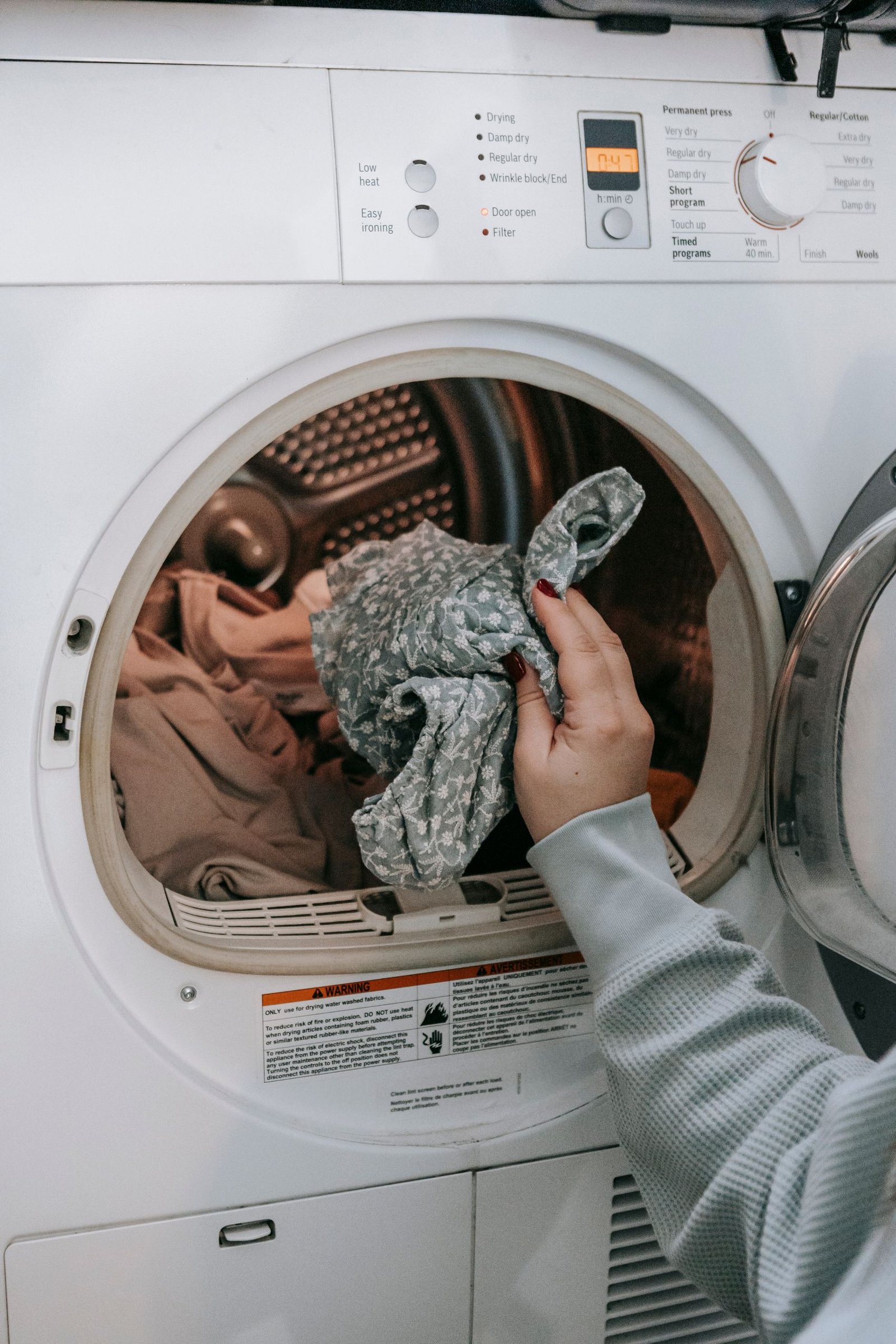
Clothes come out of the laundry smelling clean, feeling soft, and looking bright. That sensory experience creates a strong impression that the process worked — that whatever was on the clothes is gone and what replaced it is neutral. What’s actually left on the fabric after a wash cycle, what gets released into the air during drying, and what accumulates in the machine itself tells a more complicated story.
The laundry room is one of the most chemically active spaces in the home — products are heated, agitated, and aerosolized in a cycle that touches every piece of clothing and bedding that comes into sustained contact with skin. This is the fourth installment in the Hidden Toxin Exposure Series — a room-by-room guide to the overlooked exposure sources in the home.
Laundry Detergent
Laundry detergent is the foundation of the wash cycle — and the product whose residue stays on fabric the longest. Unlike a rinse-off personal care product that’s removed during the same application, detergent compounds that don’t fully rinse out during the wash cycle remain in the fabric and come into sustained skin contact through clothing worn against the body and bedding slept in for hours each night.
Conventional laundry detergents are formulated with several ingredient categories worth knowing about. Synthetic fragrance is the most consistent concern — the fragrance compounds added to give detergent its characteristic clean scent are designed to linger on fabric after washing, which is the point from a marketing standpoint and the problem from an exposure standpoint. As covered in What “Fragrance” on a Label Actually Means, a single fragrance entry represents a potentially complex blend of undisclosed compounds — sensitizers, endocrine-disrupting chemicals, and synthetic musks among them — that remain in contact with skin through every garment and piece of bedding washed with that detergent.
Optical brighteners are fluorescent compounds added to detergents to make fabrics appear whiter and brighter under UV light. They work by absorbing UV radiation and re-emitting it as visible blue light — an optical effect rather than a cleaning one. They don’t rinse out — they’re designed to stay on fabric. Research has linked certain optical brighteners to skin sensitization and has raised questions about their environmental persistence, as they’re poorly biodegradable and accumulate in aquatic environments.
Surfactants — the active cleaning agents in detergent — vary widely in their profile. Conventional detergents often use petroleum-derived surfactants that are effective but raise environmental and skin contact concerns. The surfactant category also includes the enzymes used in many modern detergents — proteases, lipases, and amylases that break down protein, fat, and starch stains. Enzymes are generally considered effective and lower concern than some other detergent ingredients, but as noted in the cleaning product label article, certain enzymes have been associated with respiratory sensitization with repeated inhalation exposure — relevant in the laundry context where detergent powder or concentrate becomes airborne during use.
What to look for: fragrance-free and dye-free formulations with plant-derived surfactants and no optical brighteners. EPA Safer Choice certified detergents have been evaluated for ingredient safety across the full formulation — a more substantive filter than marketing language alone.
Fabric Softeners and Dryer Sheets
Fabric softeners and dryer sheets are the most direct residue concern in the laundry category — not because they’re used in the wash cycle but because of how they work. Their function is to coat fabric fibers with compounds that reduce static, soften texture, and add scent. That coating is designed to stay on the fabric after drying — which means it’s in sustained, direct contact with skin through every garment and piece of bedding treated with it.
Conventional fabric softeners contain quaternary ammonium compounds — the same quat class covered in the cleaning products article — used as the primary softening agent. They also contain synthetic fragrance, preservatives, and emulsifiers. Dryer sheets deliver similar compounds in a different form — a nonwoven sheet impregnated with softening and fragrance compounds that transfer to fabric during the drying cycle through heat and friction.
The fragrance compounds in fabric softeners and dryer sheets are among the most persistent in the laundry product category — specifically formulated for longevity on fabric rather than for easy removal. They accumulate over repeated washing cycles rather than diminishing, meaning fabric that’s been washed regularly with scented softener carries a growing residue load over time.
Wool dryer balls are the most straightforward functional alternative — they reduce static and drying time through physical action rather than chemical coating, leave no residue on fabric, and are reusable for years. Unscented versions are made from natural wool without dyes or treatments. For those who use fabric softener primarily for scent, a few drops of essential oil applied directly to a wool dryer ball before drying is a way to add fragrance without the synthetic compound residue.
Dryer Off-Gassing
The drying cycle is a heat-driven process that volatilizes compounds from both the fabric and the products used to treat it — releasing them into the air that vents from the dryer. In most homes, dryer vents exhaust to the exterior — which means these compounds leave the home. But the vent connection, lint trap area, and any leaks in the duct system release compounds into the laundry room itself during operation.
Research has detected a range of VOCs in dryer vent exhaust — including acetaldehyde and benzene — compounds originating from both the fabric treatment products and the fabrics themselves, particularly synthetic textiles heated during the cycle. Scented detergents and dryer sheets contribute fragrance-derived VOCs to dryer exhaust at levels that have been measured in studies of outdoor air near residential dryer vents.
The practical implications are straightforward. Running the dryer with the laundry room door open or with ventilation available during and after the cycle reduces any buildup of dryer-derived VOCs in the laundry space. Switching to fragrance-free detergent and wool dryer balls reduces the fragrance-derived VOC contribution to dryer exhaust at the source. For homes with gas dryers, ensuring the dryer vent is properly sealed and exhausting fully to the exterior is worth checking — combustion byproducts from a poorly vented gas dryer represent an additional indoor air quality concern beyond the laundry product compounds.
Microplastic Shedding
Every time a synthetic garment — polyester, nylon, acrylic, or fleece — is washed, it sheds plastic fibers into the wash water. Those fibers are small enough to pass through most wastewater treatment systems and enter waterways — and they also accumulate in the washing machine itself and can become airborne during the wash and transfer cycles.
As covered in What Are Microplastics — and Where Do They Show Up, synthetic textile washing is one of the primary sources of microplastic contamination in aquatic environments globally. At the household level, the most practical available interventions are washing bag filters and natural fiber alternatives.
Washing bags designed to capture synthetic fibers — the Guppyfriend bag being the most widely researched — catch a significant proportion of fibers shed during a wash cycle before they enter wastewater. They work by providing a fine-mesh containment for synthetic garments during washing — the fibers that shed collect inside the bag rather than entering the machine’s drain. The captured fibers can be disposed of in the trash rather than the wastewater system, which is a meaningful improvement even if it doesn’t eliminate the production of the fibers themselves.
Natural fiber alternatives — GOTS certified organic cotton, linen, wool, and hemp — don’t shed plastic fibers during washing. Incrementally replacing synthetic garments and bedding with natural fiber options reduces the source of microplastic shedding over time rather than managing the fibers after they’ve been released.
The Washing Machine Itself
The washing machine is itself an exposure source that most laundry room content doesn’t address. Front-loading washing machines — which use less water and are generally more energy-efficient than top-loaders — are particularly prone to mold and bacterial growth in the door gasket, detergent drawer, and drum.
The mechanism is straightforward. Front-loaders use less water per cycle, which means detergent residue and organic matter from clothing don’t fully flush out with each wash. The rubber door gasket traps moisture between cycles, creating a warm, damp environment where mold and bacteria thrive. The detergent drawer accumulates residue that supports the same growth. The result — the distinctive musty smell that front-loader owners often notice — is biological contamination of the machine that transfers to clothing during washing.
Mold releases spores into the laundry room air and onto the fabric being washed, contributing to indoor air quality concerns and potential respiratory effects with sustained exposure. Regular cleaning of the gasket, detergent drawer, and drum — running a hot cleaning cycle monthly with a machine cleaner or a cup of white vinegar and baking soda — reduces buildup and controls mold growth. Leaving the door ajar between cycles allows the drum and gasket to dry rather than maintaining the moisture that promotes growth.
Using less detergent than the manufacturer recommends is also worth noting — most front-loader users use significantly more detergent than the machine requires, which contributes to residue buildup that feeds mold growth over time.
Dry Cleaning
Dry cleaning is used for garments that can’t be safely washed in water — and most conventional dry cleaning uses a solvent called perchloroethylene, commonly known as PERC, to clean fabric without water. PERC is effective at removing stains and cleaning delicate fabrics — and it’s also a documented health concern worth knowing about if dry cleaning is a regular part of a clothing care routine.
PERC is classified as a probable human carcinogen by the EPA and as a known carcinogen by several other agencies. It’s a volatile compound that off-gasses from dry-cleaned garments after they’re returned — the plastic garment bag traps the vapors, which are released when the bag is opened and as the garment is worn. Bringing freshly dry-cleaned items directly into an enclosed closet or bedroom concentrates that off-gassing in the space where the most time is spent.
The practical response for garments that require dry cleaning: remove the plastic bag and air the garment outside or in a well-ventilated space for several hours before bringing it indoors. This allows the initial burst of off-gassing to dissipate before the garment enters the living environment.
Alternatives to conventional PERC dry cleaning are increasingly available. Wet cleaning — a professional cleaning method that uses water and specialized detergents in computer-controlled machines — handles most garments previously considered dry-clean-only without PERC. CO2 cleaning uses pressurized carbon dioxide as the solvent instead of PERC — an effective alternative with a significantly lower health concern profile. Looking for cleaners that specifically advertise wet cleaning or CO2 cleaning as their method is worth doing for garments that require professional cleaning regularly.
What to Look for in Safer Alternatives
The laundry room alternatives that address the most significant exposure categories are practical and increasingly available.
Fragrance-free, dye-free laundry detergent with plant-derived surfactants and no optical brighteners is the most impactful single swap in the laundry room — it addresses what stays on fabric and what gets released into the air during drying simultaneously. EPA Safer Choice certification is the most relevant filter for detergent — it covers the full ingredient profile rather than a single compound. GOTS certified detergents are available for those who want organic ingredient sourcing as part of the standard.
Wool dryer balls replace fabric softeners and dryer sheets with a residue-free alternative that performs the same practical functions — reducing static and drying time — without leaving compounds on fabric. They’re reusable, typically lasting several years, and eliminate the need for disposable dryer sheets entirely.
A Guppyfriend washing bag or similar fine-mesh filter bag addresses microplastic shedding from synthetic garments that aren’t being replaced immediately — a practical interim step that reduces the most significant environmental and wastewater impact of synthetic textile washing.
For dry cleaning, seeking out wet cleaning or CO2 cleaning services where available is worth doing for garments cleaned regularly. Airing PERC-cleaned garments before bringing them indoors addresses the off-gassing concern for items cleaned conventionally in the meantime.
Where to Start
Detergent is the highest priority — it affects everything that comes out of the wash and what stays on fabric in sustained skin contact. Switching to a fragrance-free, dye-free, EPA Safer Choice certified detergent addresses the most significant laundry room exposure in one step.
Fabric softener and dryer sheets are the most direct residue concern — their function is to stay on fabric, which makes them a more sustained exposure source than detergent. Replacing them with wool dryer balls is an immediate, low-cost swap that requires no adjustment to the washing routine.
Washing machine maintenance is worth addressing on a monthly basis — a clean machine produces cleaner laundry and reduces the mold and bacterial contamination that transfers to fabric during washing.
Dry cleaning and microplastic shedding are lower-frequency concerns that can be addressed incrementally — airing dry-cleaned garments, using a washing bag for synthetics, and replacing synthetic textiles with natural fiber alternatives over time.
What Stays on the Fabric
The laundry room’s exposure story is largely about what doesn’t leave — the fragrance compounds designed to linger, the optical brighteners designed to stay, the fabric softener coating designed to remain. Every garment and piece of bedding washed with conventional products carries those residues into sustained, daily contact with skin.
The next installment in the Hidden Toxin Exposure Series covers the living room — where furniture materials, flooring, and the products used to clean and maintain them converge in the space where the most waking hours are spent. A dedicated laundry room product recommendations guide is also coming soon.
The Hidden Toxin Exposure Series continues room by room. Browse our Conscious Home articles to keep building from here — and stay tuned for our non-toxic laundry product recommendations guide, coming soon.


Leave a Reply