
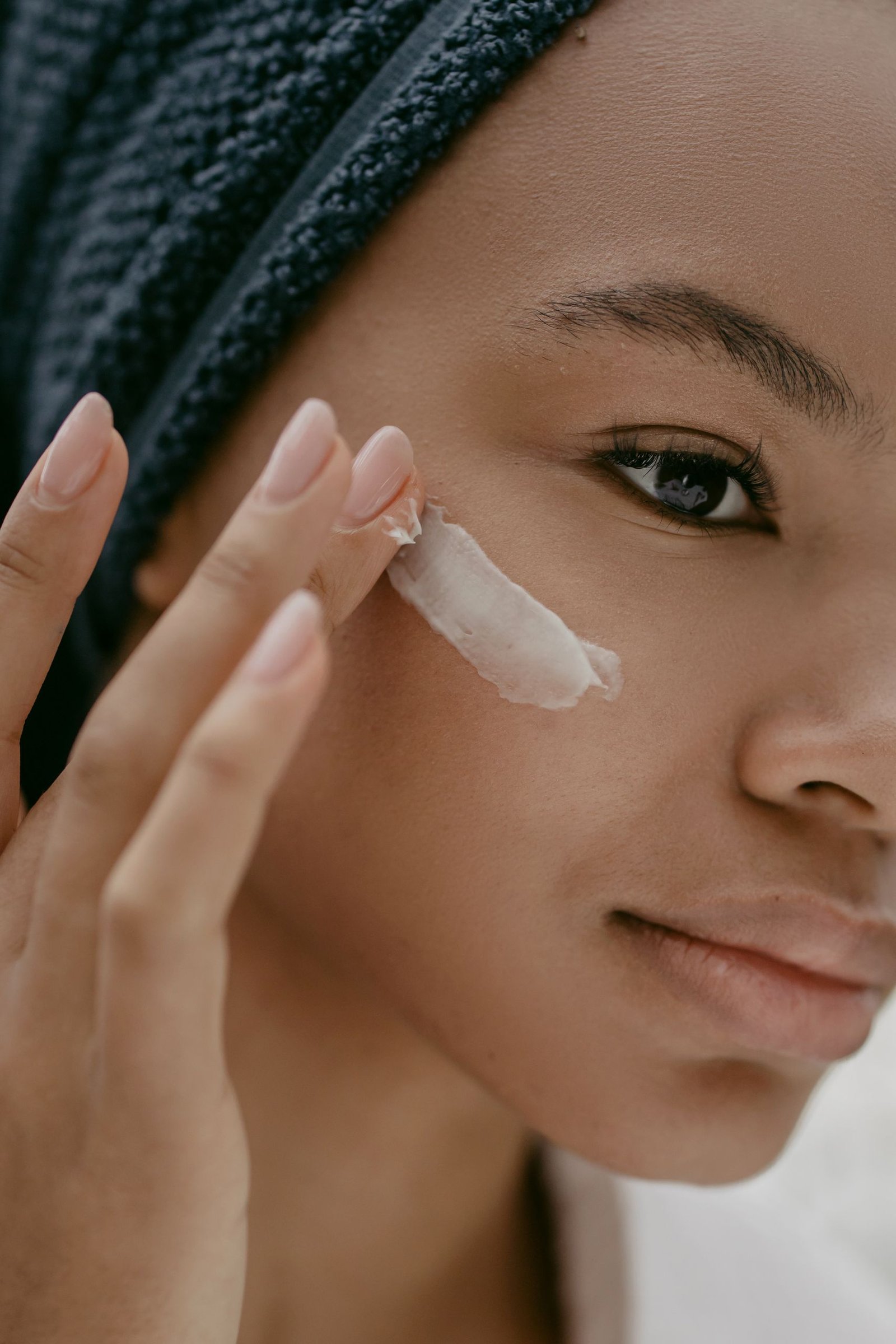
There’s a texture that certain moisturizers, primers, and hair products create on contact — an immediate smoothness, a slip that makes the product feel like it’s doing something significant the moment it’s applied. That sensation is often the work of silicones — a class of synthetic ingredients so widely used in personal care that most people encounter them daily without knowing what they are or what they’re actually doing.
Understanding silicones means separating what they genuinely do from what they appear to do — and understanding why their use has become increasingly debated across both skin health and environmental grounds.
What Silicones Actually Are
Silicones are synthetic polymers — large molecules built from repeating chemical units — made from silicon, oxygen, carbon, and hydrogen. Despite the similar name, they’re distinct from silicon, the natural element found in sand, quartz, and soil. Silicon is a naturally occurring mineral. Silicones are manufactured compounds produced through industrial chemical processes that combine silicon with other elements to create materials with specific properties — primarily smoothness, flexibility, water resistance, and thermal stability.
In personal care, silicones appear across a wide range of product categories — moisturizers, foundations, primers, hair serums, conditioners, body lotions, and sunscreens — often as primary ingredients rather than minor additives. They’re identifiable on ingredient lists by their naming conventions: ingredients ending in “-cone,” “-conol,” “-siloxane,” or “-methicone” are all silicones. The most commonly encountered include dimethicone — the most widely used — along with cyclopentasiloxane, cyclomethicone, and phenyl trimethicone.
Two broad categories are worth distinguishing. Volatile silicones — including cyclopentasiloxane and cyclomethicone — evaporate from the skin after application, leaving a temporary smooth feel without a persistent film. Non-volatile silicones — including dimethicone — remain on the skin surface after application, forming a continuous film that doesn’t evaporate.
What They Do in Formulations
Silicones are used in personal care primarily for their sensory and functional properties — and they perform those functions exceptionally well, which explains their prevalence across the industry.
As film-forming agents, silicones create a smooth, even coating on the skin or hair surface. On skin, this film reduces friction, fills in texture irregularities, and creates the immediate softness most people associate with an effective moisturizer. On hair, silicones coat each strand and reduce friction between strands — creating shine, reducing frizz, and making hair easier to detangle. These are real effects — silicones genuinely produce the sensory outcomes they’re associated with.
What they don’t do is equally important to understand. Silicones don’t moisturize skin — they create the sensation of moisture by reducing water loss from the surface, but they don’t add water or nutrients to the skin. They don’t condition hair in the biological sense — they coat the hair shaft rather than improving its structure. The smoothness and shine they produce are surface effects that last as long as the silicone coating is present, not improvements to the underlying condition of the skin or hair.
This distinction — between surface effects and genuine functional improvement — is central to understanding why silicones have become controversial in the non-toxic and clean beauty space. A product that feels effective because of its silicone content may be masking rather than addressing the underlying condition it appears to improve.
The Skin Barrier Argument
The primary concern about silicones from a skin health perspective is their occlusive nature — the film they form on skin traps not only moisture but also sebum, sweat, bacteria, and other compounds that the skin naturally produces and cycles through.
The skin’s surface is not a sealed environment — it constantly sheds cells, releases sebum, and cycles compounds through its surface as part of normal skin function. An occlusive film that interferes with that natural cycling can, in theory, contribute to clogged pores, increased bacterial accumulation, and disruption of the skin’s normal surface processes. This is the basis for the argument that silicones contribute to breakouts and dull skin with long-term daily use — that the smoothness they create comes at the cost of the skin’s ability to function normally beneath the film.
The research on this concern is less definitive than some non-toxic beauty content suggests. The evidence that silicones as used in topical personal care products cause significant harm to skin barrier function in the general population is not robust. Most dermatological assessments have concluded that dimethicone and similar non-volatile silicones are well tolerated and not significantly comedogenic — meaning they don’t reliably cause clogged pores — at the concentrations used in most formulations.
The broader safety research on silicones has historical context worth noting. Busch’s 1994 toxicology review of silicones and Yoshida et al.’s 1994 research on silicone immunotoxicity were conducted primarily in the context of silicone breast implants — internal medical-grade silicone rather than topical personal care application. The findings from that research informed general understanding of silicone biological interactions but don’t translate directly to conclusions about topical product use. The exposure routes, concentrations, and material forms are sufficiently different that implant research and topical product research need to be considered separately.
What can be said with more confidence is that some individuals — particularly those with oily or acne-prone skin — do find that heavy silicone-containing products contribute to congestion and breakouts, while others with dry or sensitive skin find them well-tolerated or beneficial. Individual skin response is a more reliable guide than categorical claims about silicone safety or harm for skin.
The Environmental Concern
The more clearly documented concern about silicones — and the one that has produced concrete regulatory action — is environmental rather than dermatological.
Cyclic silicones — particularly D4 (octamethylcyclotetrasiloxane) and D5 (decamethylcyclopentasiloxane) — are volatile silicones used in rinse-off personal care products including shampoos, conditioners, and body washes. When these products are rinsed down the drain, cyclic silicones enter wastewater systems. Unlike many compounds that break down during wastewater treatment, D4 and D5 are persistent — they pass through treatment systems largely intact and accumulate in aquatic sediment and organisms.
D4 has been identified as a substance of very high concern by the European Chemicals Agency — classified as persistent, bioaccumulative, and toxic to aquatic organisms. D5 has been identified as persistent and bioaccumulative. The EU restricted both D4 and D5 in rinse-off cosmetic products in 2018, setting concentration limits that effectively removed them from most wash-off formulations sold in European markets.
The U.S. has not implemented equivalent restrictions. D4 and D5 remain permitted in rinse-off personal care products sold in the U.S. — reflecting the same regulatory philosophy difference covered in other articles on this platform, where the U.S. standard requires demonstrated harm before restriction while the EU applies a more precautionary standard to persistent and bioaccumulative compounds.
The environmental persistence concern applies specifically to cyclic silicones in rinse-off products — it’s less directly applicable to non-volatile silicones like dimethicone in leave-on products, which don’t enter wastewater systems in the same way. But it’s a meaningful regulatory signal about a compound class that most personal care content treats as a purely cosmetic question.
What “Silicone-Free” Actually Means
The silicone-free label on personal care products tells you that silicone compounds have been excluded from the formulation. What it doesn’t tell you is what replaced them — and as covered in Personal Care Marketing Claims: What They Really Mean, free-from claims are only as useful as the replacement they imply.
When silicones are removed from hair and skin care formulations, something else needs to provide the slip, film-forming, and smoothness properties they contribute. Plant-derived oils, esters, and waxes are the most common alternatives — ingredients like squalane, jojoba oil, shea butter, and various plant esters that provide emollient and smoothing effects through a different mechanism. Unlike silicones, these ingredients interact with the skin’s own lipid chemistry rather than sitting on top of it — which means their effects on skin texture develop over time rather than appearing immediately on application.
This is why the transition to silicone-free products often involves an adjustment period — the immediate silky texture that silicones provide isn’t replicated instantly by plant-based alternatives. As covered in What Happens to Your Skin When You Switch to Non-Toxic Products, giving new products adequate time before evaluating whether they’re working is particularly relevant when switching away from silicone-heavy formulations.
For hair specifically, the transition away from silicone-containing conditioners and serums typically involves a period where hair feels different — heavier or less smooth — while buildup from previous silicone use clears and the hair’s natural texture reasserts itself. Clarifying with a sulfate-free clarifying shampoo before switching to silicone-free products removes existing buildup and shortens the adjustment period.
How to Identify Them on a Label
Silicones are consistently named on ingredient lists using recognizable conventions — making them one of the easier ingredient classes to identify once you know what to look for.
Any ingredient ending in “-cone” — dimethicone, trimethicone, phenyl trimethicone — is a silicone. Any ingredient ending in “-conol” — dimethiconol — is a silicone. Any ingredient ending in “-siloxane” — cyclopentasiloxane, cyclomethicone — is a silicone. Any ingredient containing “silicone” in its name explicitly is a silicone.
Silicones typically appear in the upper half of an ingredient list in products where they’re a primary sensory ingredient — their position reflects their concentration, and in silicone-heavy formulations they’re often among the first several entries after water. In products where they appear lower on the list, they’re present in smaller amounts and contribute less to the product’s overall sensory profile.
A Nuanced Ingredient Class
Silicones occupy an unusual position in the personal care ingredient conversation — they’re not among the most acutely concerning ingredient classes from a human health standpoint, but they raise legitimate questions about what they’re replacing in terms of skin function, and they raise more clearly documented concerns from an environmental standpoint that have produced concrete regulatory action.
The most useful frame for thinking about them is what they do versus what they appear to do — surface effects versus genuine functional improvement — and whether the smooth, silky texture they produce is worth the occlusive film they create on skin and the environmental persistence they contribute to through rinse-off use.
For those choosing to reduce or eliminate silicones, the transition takes time and the alternatives require adjustment. For those who find silicone-containing products well-tolerated and effective, the human health concern is lower than the environmental one — and selecting leave-on rather than rinse-off formulations reduces the environmental persistence concern that the EU’s regulatory action specifically addressed.
The framework is one piece of the picture. Browse our Personal Care articles to build on what you know — and make more informed choices about what goes on your body.


Leave a Reply