
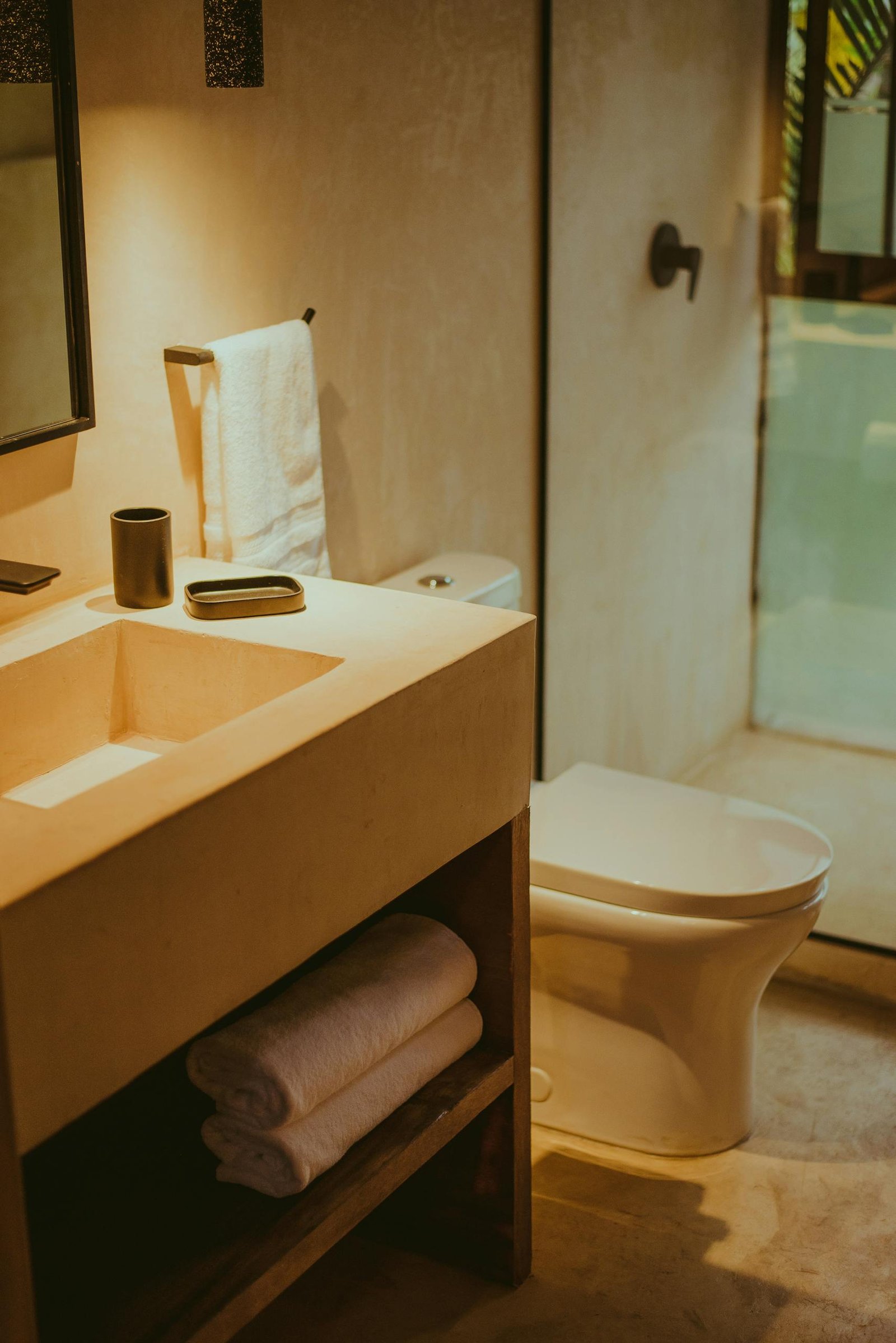
The day starts and ends in the bathroom. In the morning it’s toothbrush, face wash, towel, toilet paper, hand soap — a sequence most people move through on autopilot. At the end of the day it’s a hot shower, steam filling the room, washing off whatever the day left behind. What doesn’t get considered is what that steam is doing — heating up the shower curtain, the residue from cleaning products on the surfaces, the fragrance compounds still in the air — in an enclosed room with the door shut and nowhere for any of it to go.
The bathroom is where the highest concentration of personal care and cleaning products in the home gets used in the shortest window of time — and it’s one of the smallest, least ventilated rooms in most homes. That combination makes it one of the more significant exposure environments in the house, and one that rarely gets examined with that in mind.
This is the third installment in the Hidden Toxin Exposure Series — a room-by-room guide to the overlooked exposure sources in the home.
Personal Care Product Load
The bathroom is where personal care exposure concentrates most. A typical morning routine — face wash, toner, moisturizer, SPF, shampoo, conditioner, body wash, deodorant, toothpaste — involves anywhere from six to twelve products before leaving the house. Each one brings its own ingredient profile, and the skin absorbs compounds from all of them in rapid succession during a window of twenty to thirty minutes.
What makes this worth examining as a cumulative issue rather than a product-by-product one is the combination effect. A fragrance compound in a face wash, a preservative in a moisturizer, a synthetic musk in a shampoo — none of these in isolation necessarily presents a significant concern. Applied back to back across multiple products to freshly washed, warm, more permeable skin, the aggregate is a different picture than any single product evaluation captures.
As covered in Why the Skin Barrier Matters — and What Disrupts It, warm water and the cleansing process itself affect barrier integrity and skin permeability — which means the products applied immediately after a shower are absorbed more readily than the same products applied to dry, intact skin at any other point in the day. The bathroom routine is the highest-absorption window in a typical day, which makes what’s in those products more relevant than it might seem in a different context.
Hot Shower Exposure and the Shower Environment
Hot water does more than clean — it opens pores, increases skin permeability, and converts compounds in tap water into steam that gets inhaled directly. Two of the most consistent concerns in this context are chlorine and chloramine — chemicals added to municipal water supplies as disinfectants.
Chlorine and chloramine are effective at killing pathogens in drinking water, but they behave differently in a hot shower than they do in a glass of water. Heat volatilizes these compounds — turning them from dissolved substances in water into airborne gases that are inhaled through the lungs and absorbed through the skin simultaneously. The absorption rate through inhalation is higher than through ingestion, which means a ten-minute hot shower can represent a more significant chlorine exposure than drinking several glasses of the same tap water. In a small, poorly ventilated bathroom, those compounds accumulate in the air rather than dispersing. The health implications of regular exposure show up in ways that are easy to attribute to other causes — dry, itchy, or irritated skin that doesn’t resolve with moisturizer, a compromised scalp barrier that contributes to thinning or brittle hair, eye and throat irritation during or after showering, and respiratory sensitivity that builds gradually with repeated exposure. These symptoms are common enough that most people assume they reflect their skin or hair type rather than a direct response to what’s in the water.
Shower filters designed to reduce chlorine and chloramine are a relatively low-cost addition to an existing shower setup and address the most direct exposure point at the source. They don’t provide the comprehensive filtration that an under-sink reverse osmosis system does — but for shower-specific exposure, they cover the most relevant concern.
PVC shower curtains are another shower environment concern that operates through a different mechanism. PVC — polyvinyl chloride — is one of the more chemically complex plastics, requiring significant additives including phthalates and stabilizers to achieve the flexibility needed for a shower curtain. When a new PVC shower curtain is exposed to heat and steam, it off-gasses VOCs and phthalates into the enclosed bathroom air — a process most people have noticed as the distinctive smell of a new shower curtain without knowing what it represents. Research has detected dozens of volatile compounds released from PVC shower curtains, with off-gassing most intensive in the first weeks of use and in warm, humid conditions — exactly the conditions of a hot shower.
PEVA — polyethylene vinyl acetate — is a common alternative marketed as a safer option than PVC. It doesn’t contain the same phthalate additives and off-gasses less than PVC, but it is still a synthetic plastic material. Fabric shower curtains in GOTS certified organic cotton or linen with a separate non-PVC liner are the more transparent alternative — natural fiber outer curtains don’t off-gas, and replacing only the liner when needed reduces overall plastic use.
Moisture, Mold, and Smarter Surface Solutions
The bathroom produces more sustained moisture than any other room in the home — and moisture that isn’t managed becomes a mold and mildew problem. Mold releases spores and mycotoxins into the air, contributing to indoor air quality concerns that extend beyond the bathroom itself when spores circulate through the home’s ventilation.
Conventional solutions to bathroom moisture — synthetic bath mats, plastic soap dishes, and standard toothbrush holders — tend to accumulate water and create conditions where mold and bacteria thrive rather than addressing the underlying moisture issue. A bath mat that stays damp for hours after use, a soap dish with standing water, or a toothbrush holder with pooled water at the base are all environments where bacterial and mold growth occurs consistently.
Diatomaceous earth — a naturally occurring material made from the fossilized remains of tiny aquatic organisms — is exceptionally absorbent and dries quickly after contact with water, which makes it a practical material for bathroom accessories. Diatomaceous earth bath mats absorb water rapidly and dry within minutes, preventing the sustained dampness that promotes mold growth. Diatomaceous earth soap dishes and toothbrush holders follow the same principle — the material wicks moisture away from surfaces rather than allowing it to pool. Unlike synthetic alternatives, diatomaceous earth is naturally resistant to mold and bacteria without requiring chemical treatment.
Ventilation is the primary prevention tool for bathroom moisture more broadly. Running the exhaust fan during and for at least twenty minutes after a shower removes moisture-laden air before it settles on surfaces. In bathrooms without adequate ventilation, opening a window or door during and after showering achieves a similar result. An air purifier with HEPA filtration addresses mold spores that are already airborne — a useful complement to source control rather than a replacement for it.
Cleaning Products
Conventional bathroom cleaning products are some of the most chemically concentrated products used in the home — and the bathroom’s small size and limited ventilation means the compounds they release stay in the air longer than they would in a larger space.
Bleach — sodium hypochlorite — is the most widely used disinfectant in bathroom cleaning. It’s effective at killing pathogens but releases chlorine gas in enclosed spaces during use, which irritates the respiratory tract and eyes. When bleach comes into contact with ammonia — a compound found in many glass and surface cleaners — it produces chloramine gas, a toxic compound that causes serious respiratory harm. These two products should never be used together or in sequence in an enclosed space without thorough ventilation between applications. Many people who use both products in a bathroom cleaning routine don’t know this.
Ammonia on its own is a respiratory irritant present in many conventional glass and multi-surface cleaners. In an enclosed bathroom with limited ventilation, the fumes from an ammonia-based cleaner linger long after the cleaning is done.
Quaternary ammonium compounds — commonly called quats — are the active disinfectant ingredient in many antibacterial sprays and wipes marketed for bathroom use. They’ve been linked to respiratory sensitization with repeated exposure and have raised concerns about contributing to antibiotic resistance. They’re present in a wide range of conventional bathroom cleaning products under names including benzalkonium chloride and didecyl dimethyl ammonium chloride.
Hydrochloric acid is found in many toilet bowl cleaners — it’s effective at dissolving mineral deposits but releases fumes in enclosed spaces that irritate the respiratory tract and mucous membranes. Using it in a bathroom without opening a window or running ventilation concentrates those fumes in the space where you’re working.
Synthetic fragrance appears in most conventional bathroom cleaners, adding a fragrance compound exposure layer on top of the active chemical concerns. As covered in What “Fragrance” on a Label Actually Means, synthetic fragrance in an enclosed space releases VOCs that linger in the air after the cleaning is done.
Fragrance-free, plant-based cleaning alternatives — including castile soap, white vinegar, and baking soda — handle most bathroom cleaning tasks without the VOC and respiratory exposure that conventional products introduce. They’re less visually marketed than conventional cleaners but functionally effective for routine cleaning. For genuine disinfection needs, 75% isopropyl alcohol is a more transparent alternative to bleach — the concentration most effective at killing pathogens on surfaces, including bacteria, viruses, and fungi, because it maintains enough contact time to work before evaporating. It doesn’t release toxic gases or leave chemical residue in an enclosed space. One practical note: isopropyl alcohol is flammable and shouldn’t be used near open flames or stored in high-heat environments.
Toilet Paper
Toilet paper is a direct-contact product used multiple times daily against some of the most sensitive and absorptive tissue in the body — and its composition receives almost no consumer attention.
Conventional toilet paper is made from wood pulp that undergoes chlorine bleaching to achieve the bright white appearance most consumers associate with cleanliness. Chlorine bleaching produces dioxins as a byproduct — the same class of persistent, bioaccumulative compounds discussed in the period products article. Dioxins accumulate in body fat and persist for years, and their presence in a product used against mucous membrane tissue multiple times daily represents a cumulative exposure that most people have never considered.
PFAS have also been detected in some conventional toilet paper. Research published in 2023 found PFAS compounds in toilet paper samples from multiple countries, with the compounds likely originating from PFAS-treated paper pulp or manufacturing processes. Given that PFAS don’t break down in the body, their presence in a daily-use product with direct mucous membrane contact is worth taking seriously.
Optical brighteners — fluorescent compounds added to some toilet paper to enhance whiteness — and synthetic fragrance in scented varieties add additional compound categories to direct tissue contact without any functional benefit beyond appearance and scent.
Bamboo toilet paper is one of the more widely available alternatives. Bamboo grows rapidly without pesticides, is naturally antibacterial, and produces a softer fiber than recycled paper. Many bamboo toilet paper brands use totally chlorine-free bleaching or no bleaching at all — eliminating the dioxin concern at the processing level. Unbleached toilet paper — available in both bamboo and recycled paper options — goes further by removing the bleaching step entirely.
Bidets are the most direct solution — reducing or eliminating toilet paper use entirely. They’re available as standalone fixtures, toilet seat attachments, and handheld sprayers across a wide price range. The reduction in direct tissue contact with paper products addresses the dioxin, PFAS, and additive concerns simultaneously while also reducing household paper waste.
Towels
Towels maintain direct, sustained skin contact across the full body surface after every shower — and like bedding, what they’re made from and how they’ve been treated affects what stays on the skin after drying.
Conventional towels are most commonly made from cotton — which varies significantly in quality and treatment depending on whether it’s conventionally or organically grown. Conventionally grown cotton is one of the most pesticide-intensive crops globally, and residues can persist in finished fabric. Some towels are treated with antimicrobial finishes — typically using biocidal compounds designed to stay active in the fabric — and wrinkle-resistant or softness treatments that add chemical layers to a product used against skin daily.
What towels are washed with matters as much as what they’re made from. Fabric softeners coat towel fibers — reducing absorbency over time and leaving fragrance compound residue in direct contact with freshly washed skin after every use.
GOTS certified organic cotton towels are the most rigorous option — covering fiber sourcing, processing, and finishing across the full supply chain. OEKO-TEX Standard 100 certified towels verify that the finished product has been tested for harmful substances across every component. As covered in What Third-Party Certifications Actually Tell You, the two certifications answer different questions and are most useful in combination. Fragrance-free, dye-free laundry detergent without fabric softener is the complementary step — what the towel is washed with affects what stays on it as much as what the towel itself is made from.
Air Quality and Ventilation
The bathroom’s small size and the range of products used in it — cleaning products, personal care products, hot shower steam — make it one of the higher VOC environments in the home despite being used for relatively short periods. VOCs from cleaning products, synthetic fragrance in personal care, and off-gassing from materials like PVC shower curtains all contribute to bathroom air quality in ways that concentrated space makes more significant than the same compounds would be in a larger room.
Ventilation is the primary tool for managing bathroom air quality across all of these sources. Running the exhaust fan during product use — not just during and after showering — removes VOCs from the air before they accumulate. An exhaust fan that vents to the exterior is significantly more effective than one that recirculates air through a filter — if the bathroom has the option, exterior venting is worth prioritizing. For bathrooms without adequate mechanical ventilation, opening a window during and after use and keeping the bathroom door open after showering allows air exchange that reduces compound accumulation.
An air purifier with HEPA and activated carbon filtration addresses what ventilation alone doesn’t capture — mold spores, fine particulates, and residual VOCs. Given the bathroom’s size, a compact unit is sufficient for most applications.
Water Quality
Tap water in the bathroom is used for more than showering — it’s used to brush teeth, rinse the mouth, wash the face, and in some cases fill humidifiers. The same contaminants present in shower water — chlorine, chloramine, lead from older pipes, and PFAS in affected areas — are present in bathroom tap water for all of these uses. For humidifiers specifically, distilled water is the recommended alternative — it’s free of the minerals, chlorine, and contaminants present in tap water that can be aerosolized into the air during use.
For tooth brushing and mouth rinsing specifically, the mouth is a high-absorption surface — and the fluoride, chlorine, and any other compounds in tap water that enter the mouth during brushing are absorbed through the oral mucosa rather than simply being spit out. A countertop filter or filtered water pitcher in the bathroom addresses tooth brushing and face washing without requiring any installation. Faucet-mounted filters are another practical option — they attach directly to the bathroom tap and filter water at the point of use without taking up counter space. For those with a comprehensive under-sink reverse osmosis system in the kitchen, running a separate line to the bathroom tap is an option worth considering if water quality is a significant concern.
Shower filtration — covered in the hot shower section — addresses the skin and inhalation exposure route specifically. Water quality and shower filtration are complementary rather than interchangeable — each addresses a different exposure pathway from the same tap water source.
Where to Start
The bathroom has enough overlapping exposure categories that prioritization is worth addressing directly.
Ventilation and shower filtration are the highest priority — they address the most direct and most concentrated exposure sources in the bathroom and require the least disruption to an established routine. Running the exhaust fan consistently and adding a shower filter covers the most significant air quality and water quality concerns simultaneously.
Cleaning products are the most immediately actionable swap — conventional bathroom cleaners can be replaced with plant-based alternatives on the next purchase cycle without any infrastructure change. Switching to fragrance-free, plant-based options eliminates the VOC, respiratory, and fragrance compound exposure from cleaning in one step.
Toilet paper and towels are regular repurchase items that can be upgraded incrementally — bamboo or unbleached toilet paper and GOTS or OEKO-TEX certified organic cotton towels don’t require any routine change beyond choosing a different product on the next purchase.
Shower curtain and surface accessories are lower-frequency purchases that can be addressed when replacement is due — prioritizing fabric or PEVA shower curtains over PVC and diatomaceous earth accessories over synthetic alternatives when the current ones need replacing.
A Room Worth Examining Closely
The bathroom concentrates personal care exposure, cleaning product exposure, water quality concerns, and material off-gassing in one of the smallest and least ventilated rooms in the home. Addressing it doesn’t require a full renovation — it requires knowing where the meaningful exposures are and making practical adjustments at the points that matter most.
The next installment in the Hidden Toxin Exposure Series covers the laundry room — where the products used to clean clothes affect what stays on the fabrics in contact with skin throughout the day. A dedicated bathroom product recommendations guide is also coming soon.
The Hidden Toxin Exposure Series continues room by room. Browse our Conscious Home articles to keep building from here — and stay tuned for our non-toxic bathroom product recommendations guide, coming soon.

Leave a Reply