
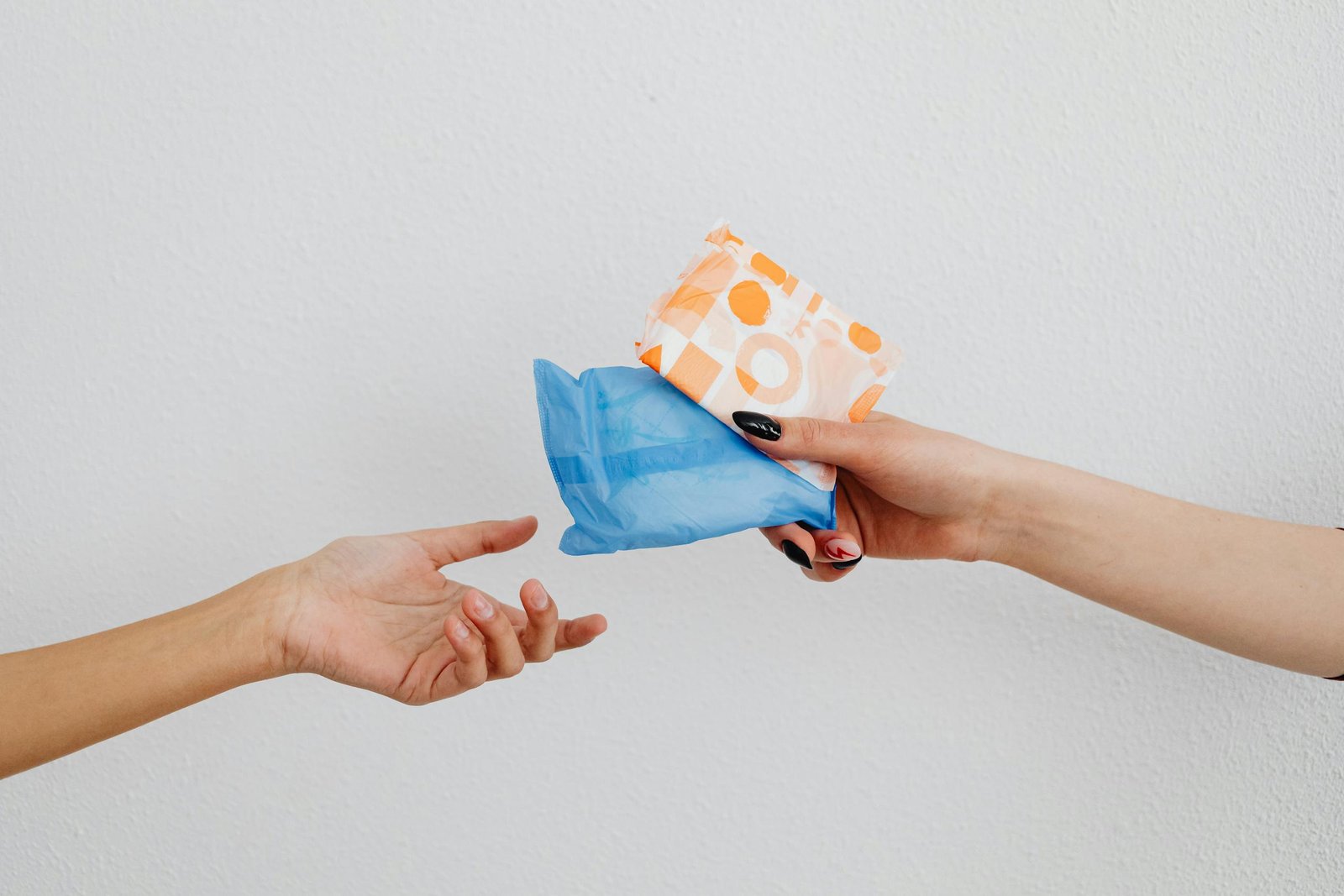
Periods aren’t something anyone chooses — they’re a biological reality that begins in the early teens and continues for several decades. The products designed to manage them are treated as a straightforward solution: something to prevent leakage and get on with the day. What gets far less attention is that those same products — sitting against or inside the body for hours at a time, month after month for the majority of our lives — may be doing some leaking of their own. The materials period products are made from, and the compounds those materials contain, have direct access to some of the most absorptive tissue in the body. That’s a different kind of exposure than most personal care products create — and one worth understanding.
Why Period Products Are a Distinct Exposure Category
The vaginal and vulvar tissue is significantly more absorptive than most external skin surfaces. Unlike the skin on the arms or legs — which has multiple layers that slow the penetration of compounds — vaginal mucosa is a thinner, highly vascularized tissue that allows substances to pass into the bloodstream more readily. This is the same biological property that makes vaginal drug delivery an effective medical route — and it’s why what period products contain matters more than what their external appearance might suggest.
The exposure isn’t brief. A tampon worn for several hours, a pad in contact with vulvar tissue throughout the day, or a panty liner used daily between periods represents sustained, repeated contact across a lifetime of menstruation. When the same compounds are present month after month across decades of use, cumulative exposure becomes the relevant frame — not single-use risk assessment.
This is a product category that the FDA regulates as a medical device, which means manufacturers aren’t required to disclose a full ingredient list the way cosmetic or food manufacturers are. What goes into a conventional period product — the fibers, the processing chemicals, the additives — is largely invisible to the person using it.
Heavy Metals
Heavy metals — including lead, arsenic, cadmium, and mercury — are naturally occurring elements that become harmful to human health at elevated exposure levels. They accumulate in the body over time rather than clearing between exposures, and they have been linked to a range of health effects including reproductive harm, hormonal disruption, neurological effects, and certain cancers.
Heavy metals end up in period products through several pathways. Cotton — the primary fiber in most conventional period products — absorbs heavy metals from soil during growth. Agricultural soil contaminated through industrial activity, mining, or the use of certain pesticides and fertilizers can contain elevated levels of heavy metals that transfer into the plant fiber. Manufacturing processes — including bleaching, dyeing, and finishing — can introduce additional heavy metal contamination depending on the chemicals used and the standards applied at the facility level.
Research published in 2023 by Costello et al. in Environment International analyzed tampons from a range of brands sold in the U.S. and UK and detected arsenic, cadmium, lead, and other heavy metals across both organic and conventional products — with conventional products showing higher concentrations in most cases. The findings were significant because they applied to a product used internally against highly absorptive tissue — a different risk profile than the same metals detected in, say, food packaging or an external personal care product.
The presence of heavy metals in period products isn’t a manufacturing defect — it reflects the broader reality that cotton grown in contaminated soil carries what that soil contains, and that processing standards don’t always screen for or eliminate these compounds before the finished product reaches consumers.
Dioxins and Bleaching Byproducts
Dioxins are a class of chemical compounds produced as byproducts of certain industrial processes — including the chlorine bleaching of cotton and rayon used in conventional period products. They aren’t added intentionally — they form during the bleaching process and can remain in the finished fiber in trace amounts.
Dioxins are among the most studied environmental toxins. They accumulate in body fat and persist for years, are classified as known human carcinogens by the International Agency for Research on Cancer, and have been associated with reproductive and developmental effects, immune system disruption, and hormonal interference. Their persistence means that repeated low-level exposure — through products used monthly for decades — contributes to a cumulative body burden that single-exposure assessments don’t capture.
The conventional bleaching process most commonly used in period product manufacturing — elemental chlorine bleaching — produces the highest levels of dioxin byproducts. Elemental chlorine-free and totally chlorine-free bleaching processes produce significantly lower levels or none at all. Unbleached products eliminate the bleaching step entirely. Looking for products that specify totally chlorine-free or unbleached processing is the most direct way to address this concern — though because period products aren’t required to disclose processing methods, finding that information often requires looking beyond the standard product label.
Pesticide Residues
Cotton is one of the most pesticide-intensive crops grown globally. Conventional cotton farming uses a significant volume of synthetic pesticides and herbicides — including some compounds that have been flagged for reproductive toxicity, endocrine disruption, and carcinogenicity. These residues can persist in the finished fiber after processing, meaning the conventionally grown cotton in a pad or tampon may carry trace pesticide residues into contact with vaginal and vulvar tissue.
Glyphosate — the most widely used herbicide globally — has been detected in conventional cotton products including period products in several studies. Its classification as a probable human carcinogen by the International Agency for Research on Cancer has made its presence in products with sustained mucous membrane contact a documented area of concern.
Organic cotton certification addresses pesticide residues at the agricultural level — requiring that fiber be grown without synthetic pesticides, synthetic fertilizers, or GMOs and verified by an accredited certifying agent. Choosing period products made from certified organic cotton is the most direct available filter for pesticide residue in this category.
Fragrance and Other Additives
Scented period products — pads and liners marketed as fresh, clean, or odor-neutralizing — contain synthetic fragrance compounds applied to materials that sit against vaginal and vulvar tissue. As covered in What “Fragrance” on a Label Actually Means, a single fragrance entry can represent dozens of individual compounds — sensitizers, endocrine-disrupting compounds, and synthetic musks — none of which are individually disclosed.
The vaginal mucosa is not a surface suited to synthetic fragrance exposure. It maintains a carefully balanced microbiome and pH environment that is easily disrupted — and fragrance compounds applied in this area can contribute to irritation, sensitization, and microbiome disruption in ways that wouldn’t occur with the same compounds applied to external skin. Gynecological organizations have consistently recommended against scented period products for this reason, and the research on fragrance compounds and vaginal health supports that recommendation.
Beyond fragrance, some conventional period products contain odor-neutralizing additives, moisture-wicking treatments, and adhesive compounds whose full composition isn’t disclosed on the label. The same regulatory gap that applies to fragrance — no requirement for individual compound disclosure — applies to these additives as well.
What to Look for in Safer Alternatives
Navigating period product alternatives is more straightforward once you know what the key filters are.
For disposable products — pads, tampons, and panty liners — the most relevant filters are organic cotton certification and unbleached or totally chlorine-free processing. GOTS — the Global Organic Textile Standard — is the most rigorous certification for organic fiber, covering the full supply chain from fiber sourcing through processing and finishing. It addresses both pesticide residues at the agricultural level and the processing chemicals used in manufacturing. OEKO-TEX Standard 100 evaluates finished textile products for harmful substances — including pesticide residues, heavy metals, formaldehyde, and certain dyes — across every component of the finished product. As covered in What Third-Party Certifications Actually Tell You, the two certifications answer different questions and are most useful in combination — GOTS speaks to how the fiber was grown and processed, OEKO-TEX speaks to what’s detectable in the finished product.
Fragrance-free is a non-negotiable filter for this product category. The case for avoiding synthetic fragrance in products with sustained vaginal contact is straightforward — there is no benefit that outweighs the documented concerns, and the vaginal microbiome is not a surface that benefits from added scent compounds.
Menstrual cups made from natural rubber — also called latex — are the most transparent reusable option from a material standpoint. Natural rubber is derived from rubber tree sap and doesn’t carry the synthetic polymer concerns associated with silicone or plastic alternatives. Worth noting for those with latex sensitivity — natural rubber is not suitable for everyone, and that consideration applies here.
Period underwear has faced documented scrutiny for PFAS content. Several major period underwear brands were found to contain PFAS compounds in their moisture-wicking layers — the same class of forever chemicals discussed in the cookware and food packaging articles. PFAS are used in some period underwear for their moisture-resistance properties, and their presence in a product worn against the vulva for extended periods is a concern that several brands have since moved to address. Looking specifically for brands that have committed to PFAS-free construction and have third-party testing to verify that claim is worth doing before purchasing. GOTS and OEKO-TEX certification on the textile components are the most relevant filters — both restrict PFAS and synthetic chemical treatments that would conflict with their standards. Natural fiber options — organic cotton gussets and layers — are the most straightforward material choice.
Reusable pads made from GOTS certified organic cotton or OEKO-TEX certified natural fiber fabrics are the most transparent reusable pad option. The same textile concerns that apply to conventional bedding and clothing — pesticide residues, synthetic fabric treatments, dye compounds — apply to reusable pads, which maintain sustained contact with vulvar tissue for hours at a time. Avoiding synthetic fiber layers and looking for natural fiber construction throughout — not just the top layer — gives you the most complete picture of what the pad is actually made from.
A Product Category Worth Reexamining
Period products are used monthly for decades — a cumulative exposure duration that makes the question of what they contain more relevant than it is for most other personal care products. The combination of a high-absorption surface, sustained contact, and a regulatory framework that doesn’t require full ingredient disclosure makes this a category where independent awareness matters more than the label alone can provide.
The filters are practical and increasingly available — organic cotton, GOTS and OEKO-TEX certification, unbleached processing, fragrance-free formulation, and PFAS-free reusable options. None of them require a complete overhaul of an established routine. They require knowing what to look for — and now you do.
The framework is one piece of the picture. Browse our Personal Care articles to build on what you know — and make more informed choices about what goes on your body.


Leave a Reply